A narrow belt sorter mainly consists of five core parts: the conveying system, vision recognition system, sorting actuator, control system, and mechanical frame.
1. Conveying System
Conveyor belt: made of food-grade PVC or PU material, with a common width of 600–1200 mm and adjustable speed from 0.1 to 2 m/s.
Belt motor: usually equipped with a 0.75–3 kW servo motor, positioning accuracy ±0.1 mm.
Tensioning device: uses screw-type or pneumatic automatic tensioning to maintain belt tension at 80–150 N/m.
2. Vision Recognition System
Industrial camera: standard 20-megapixel CMOS sensor, with a maximum acquisition speed of 0.5 ms per frame.
Light source system: ring LED light source at 12,000–15,000 lux, combined with a polarizing filter.
Image processing unit: built-in GPU-accelerated processor, supporting RGB/HSV multi-color model recognition.
3. Sorting Actuator
Nozzle module: solenoid valve controlled with response time under 10 ms, aperture 0.8–1.2 mm, working pressure 0.6–0.8 MPa.
Robotic arm sorting (optional): six-axis articulated arm, repeat positioning accuracy ±0.05 mm, load capacity 3–5 kg.
Swing arm mechanism: cylinder-driven, swing angle 0–90°, cycle time 0.3 s per operation.
4. Control System
PLC main control: supports EtherCAT bus communication, with I/O points no fewer than 32.
HMI: 10.1-inch touch screen with built-in sorting strategy configuration software.
Data interface: standard gigabit Ethernet, RS485, and Profinet protocols.
5. Mechanical Structural Parts
Frame: made of 304 stainless steel square tubes measuring 40×40 mm, with sandblasted surface treatment.
Protective cover: transparent polycarbonate material, thickness no less than 3 mm.
Receiving chute: split design, capacity 50–100 L per compartment, inclination angle 30–45°.
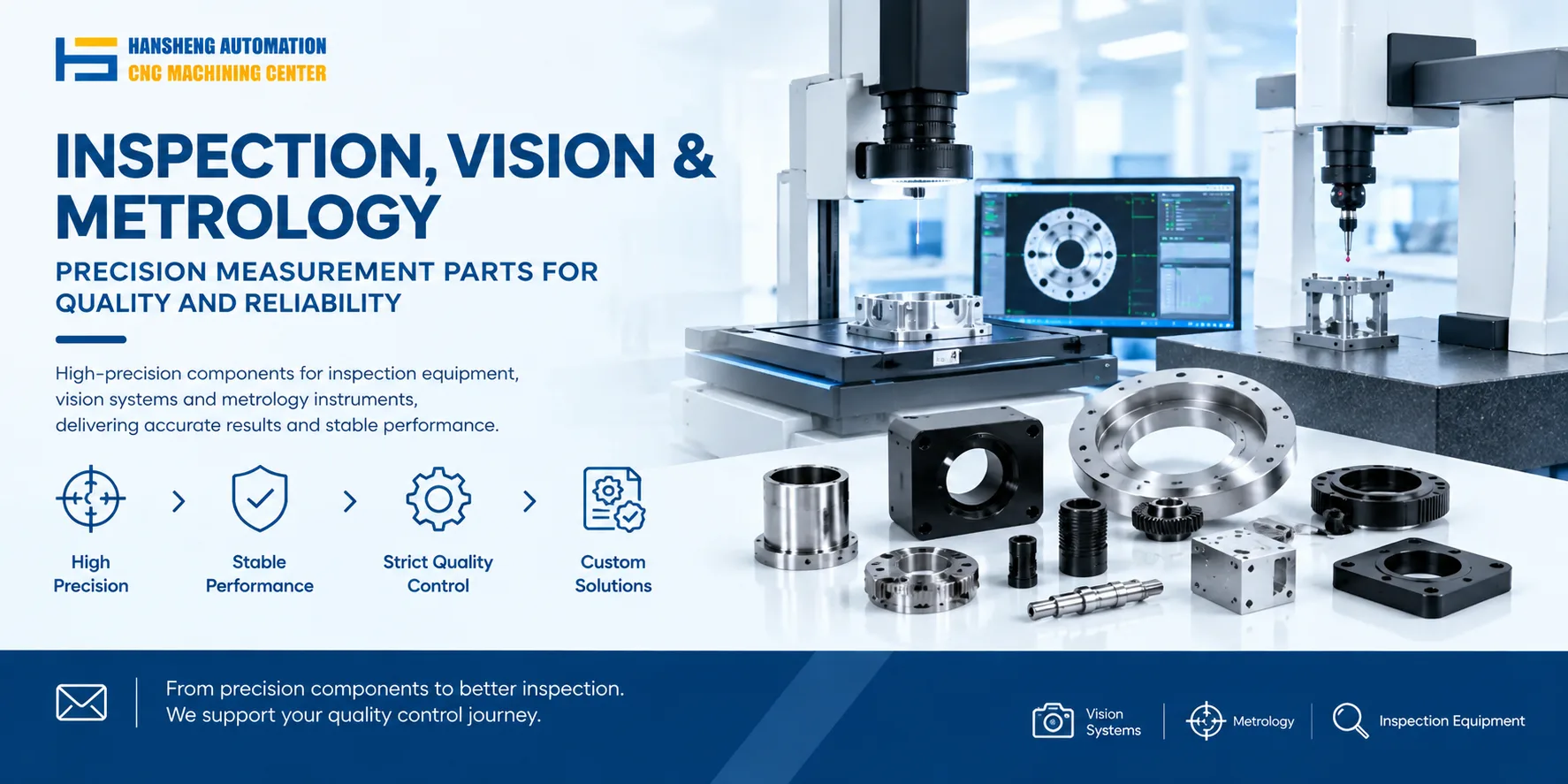
For precision-machined structural frames, nozzle brackets, or other custom components used in narrow belt sorting systems, Hansheng Automation provides machining services based on customer drawings.