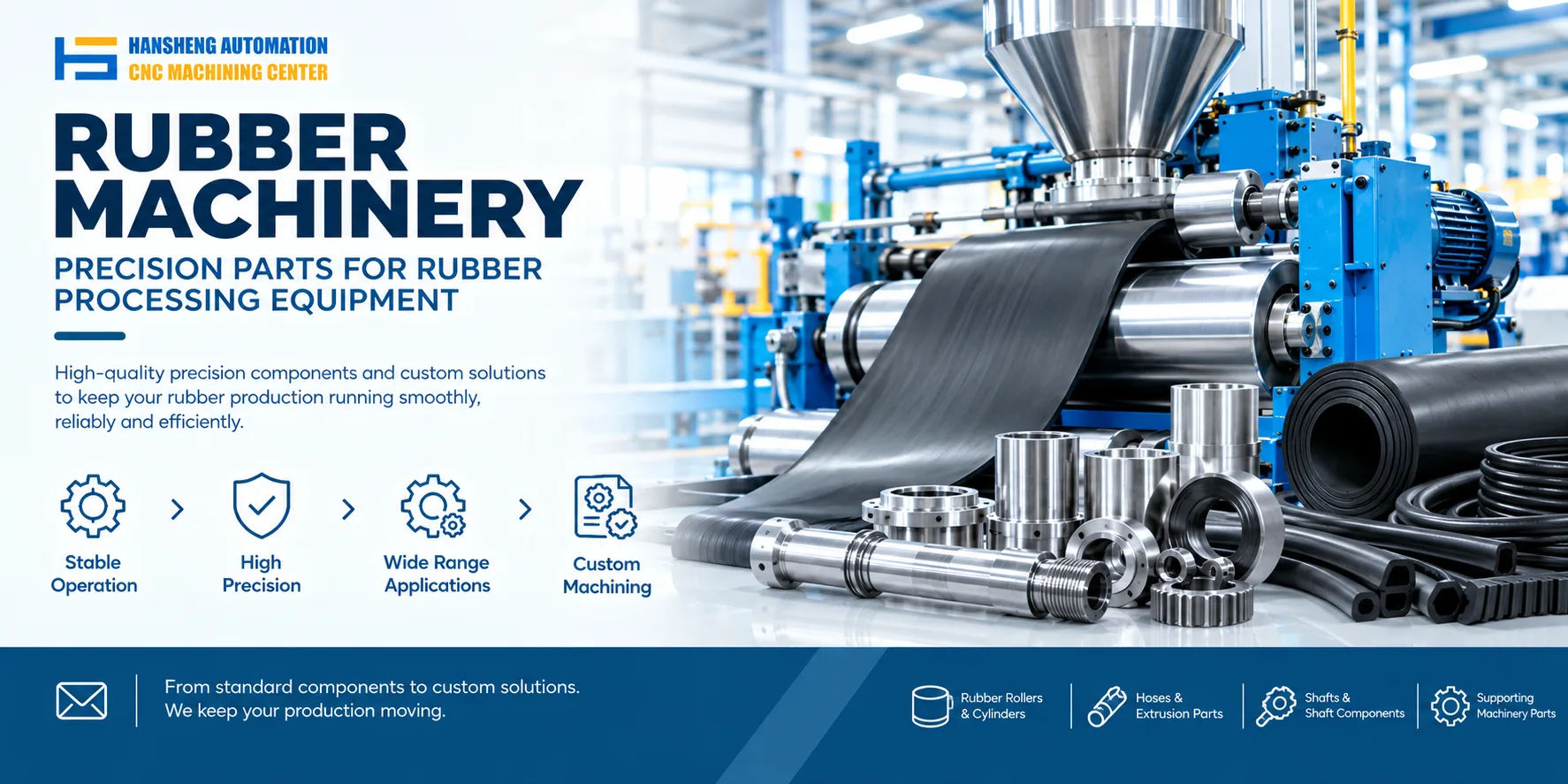
Silicone rubber is commonly mixed using an open mixing mill or an internal mixer. An open mill offers greater flexibility for small batches and frequent formulation changes, while an internal mixer handles larger batches with a higher level of automation. Depending on the equipment and compound requirements, mixing in an internal mixer may be followed by additional processing on an open mill.
1. Silicone rubber mixing with an open mill
1.1 Preparation
Raw silicone rubber should be dried before mixing. The reference process specifies a drying temperature of 40 to 60°C for 2 to 4 hours to reduce moisture content. Compounding ingredients such as silica should be ground to a particle size of 200 mesh or finer.
Set the initial roll gap to 5 to 10 mm. This provides room for the rubber to wrap around the roll during the initial stage of mixing.
1.2 Mastication
After feeding the raw rubber, use a triangular knife to cut and fold the material repeatedly. The mastication time depends on the type of silicone rubber.
For fumed silica based silicone rubber, the reference gives a mastication time of 20 to 25 minutes. For precipitated silica based material, the time is shorter, at 10 to 15 minutes.
1.3 Add ingredients in stages
Add the structure control agent, such as hydroxyl silicone oil, first and mix for 5 to 8 minutes.
Introduce the reinforcing agent in 4 to 5 batches, allowing 3 to 5 minutes between additions. This staged feeding helps distribute the silica and reduces the risk of undispersed lumps.
Add the curing agent last to reduce the risk of premature crosslinking during mixing.
1.4 Refine and form the sheet
During the thin passing stage, reduce the roll gap to 0.5 to 1 mm and pass the compound through the rolls 8 to 10 times.
After refinement, sheet the compound to a final thickness of 4 to 6 mm.
2. Silicone rubber mixing with an internal mixer
2.1 Set the operating parameters
The reference process specifies a mixing chamber temperature of 50 to 70°C and a rotor speed of 40 r/min. Under these conditions, the mixing cycle can be shortened to 15 to 20 minutes.
Actual settings should follow the requirements of the silicone rubber formulation and the equipment being used.
2.2 Add the ingredients in stages
Begin adding the compounding ingredients after the raw silicone rubber has been plasticized for 3 minutes.
Feed the reinforcing agent through the side feeder in three separate additions. The reference specifies increasing the pressure to 0.6 to 0.8 MPa for each addition to improve dispersion.
The ingredients should be introduced according to the established formulation and mixing sequence.
2.3 Complete the mixing on an open mill
After discharge from the internal mixer, transfer the compound to an open mill for additional thin passing. This stage helps process the compound after the temperature rise that occurs during internal mixing and reduces the tendency toward premature crosslinking.
The reference gives a processing time of approximately 8 to 12 minutes for this stage.
3. Comparison of the two mixing methods
|
Factor |
Open mixing mill |
Internal mixer |
|---|---|---|
|
Typical production use |
Small batches and multiple formulations |
Larger batches and production runs |
|
Mixing cycle |
Approximately 60 to 90 minutes |
Approximately 15 to 20 minutes, according to the specified process |
|
Batch capacity |
Depends on the roll dimensions and operating conditions |
Up to 200 L per batch, according to the reference |
|
Automation |
More manual intervention |
Higher level of automation |
|
Energy consumption |
Reference baseline |
Reported reduction of 30% |
|
Equipment investment |
Lower |
Approximately 3 to 5 times higher, according to the reference |
The figures above are reference values rather than universal operating specifications. Actual cycle times, capacity, and energy consumption depend on the equipment configuration and silicone rubber formulation.
For fumed silica based silicone rubber, the reference recommends considering an internal mixer to reduce airborne silica dust during material feeding. The final equipment choice should also account for batch size, formulation changes, dispersion requirements, and the need for subsequent open mill processing.
4. Custom machining for rubber processing equipment
Rubber mixing equipment may require replacement metal components manufactured to specific dimensions and fit requirements. Hansheng Automation can assess custom machining based on customer drawings, material specifications, and dimensional requirements.
Our precision machining services also cover non-standard components for packaging machinery, filling equipment, and tobacco machinery. We can assess custom parts for yacht equipment and RC racing cars according to the supplied drawings and machining requirements.