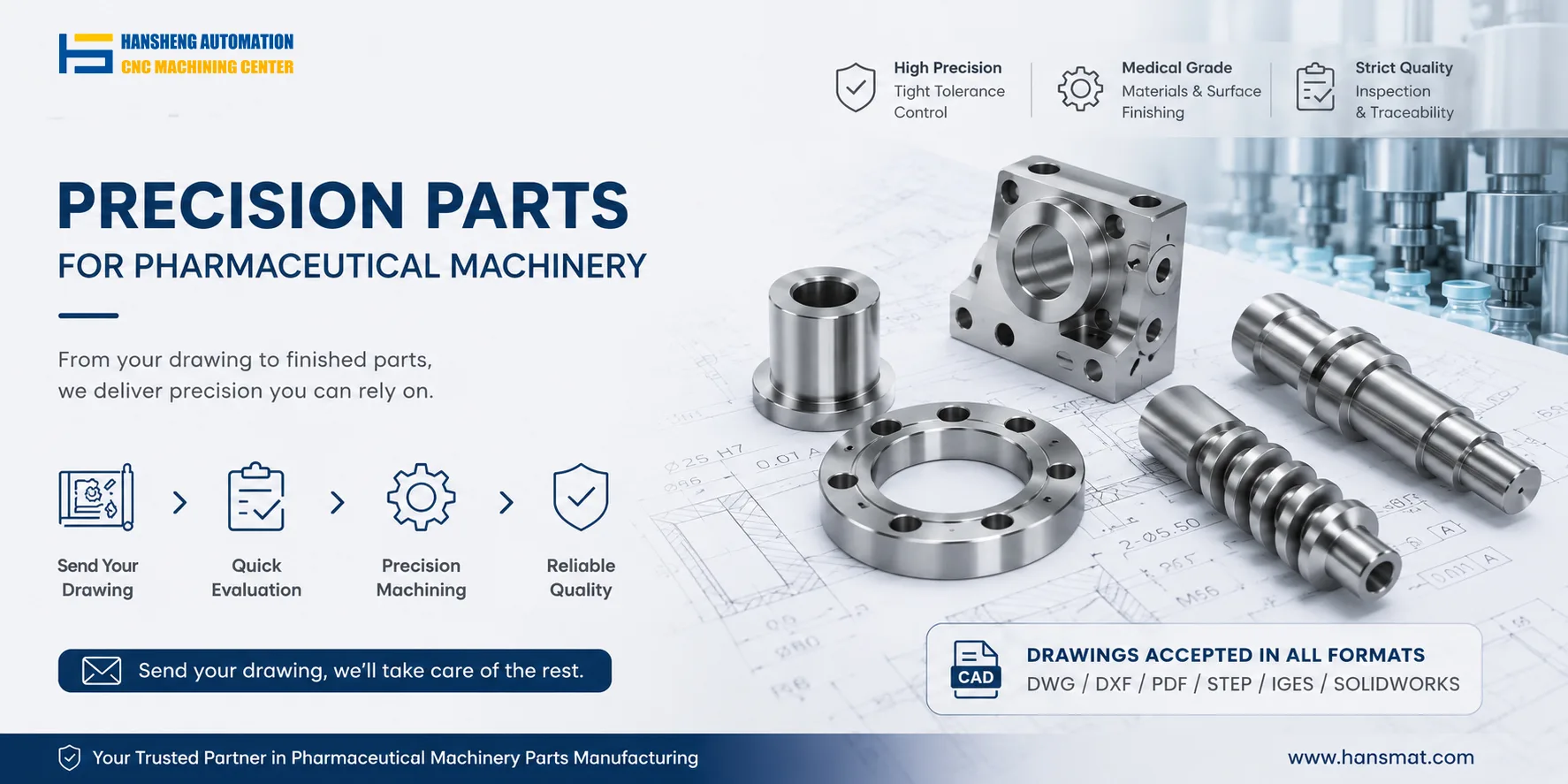
A dry granulator requires regular maintenance of its mechanical, hydraulic, and electrical systems to ensure stable operation and consistent granulation performance. For critical components, we also provide custom machining based on customer drawings and technical specifications to support equipment maintenance and replacement.
Daily Maintenance
Regularly inspect all fasteners on moving components. Tighten loose connections promptly and replace worn or damaged parts when necessary.
Lubricate the bearings approximately every six months. The grease filling amount should not exceed two-thirds of the available bearing space.
Keep the machine and surrounding area clean. Remove powder, material residue, and other debris regularly. Avoid splashing water onto the control panel or electrical components during cleaning.
Maintenance personnel should conduct periodic inspections of the transmission system, hydraulic system, lubrication points, electrical controls, and moving parts. Any abnormality should be identified and corrected promptly.
If the finished product yield decreases, check whether the compaction pressure is insufficient, the granulation speed is too high, or the screen is damaged. Operators and maintenance personnel should understand the equipment structure, operating parameters, and maintenance requirements.
Operating Procedure
1. Power Connection
Connect the power supply and ensure proper grounding. Turn on the air switch in the electrical cabinet.
2. Hydraulic Pressure Check
Open the east-side access door and operate the pressure pump handle approximately 50 times to raise the system pressure to about 6.3 MPa.
Check the hydraulic system for leakage and confirm that the pressure remains stable. The normal holding time should be more than 30 minutes. The low-pressure alarm on the electric contact pressure gauge can be set at 1 MPa. When the pressure falls below this level, the system will trigger an alarm.
If necessary, use the hand pump to restore pressure. If the pressure is not restored within the preset alarm period, the electrical control system will automatically stop the machine.
3. Hopper Lifting Check
Before operating the hopper lifting mechanism, remove the six M10 fasteners on the hopper seat. Open the left and right doors, then use the supplied hand crank to perform the lifting test.
Important: Always remove the six M10 fasteners before using the hopper lifting function to prevent mechanical interference or damage.
4. Trial Run
Start the granulation motor, compaction motor, and feeding motor. Set the granulation speed to approximately 700 rpm and adjust the other drives within the recommended range of 600–900 rpm.
Run the machine for at least 30 minutes and check:
- Motor temperature
- Transmission smoothness
- Abnormal vibration or mechanical interference
- Reducer oil leakage
- Correct rotation direction
- Belt and chain tension
- Overall balance of the moving components
- Stop the machine and investigate the cause of any abnormal condition before continuing operation.
Custom Precision Machining for Replacement Parts
The performance of a dry granulator also depends on the machining quality of critical components such as shafts, bushings, gears, sprockets, and compaction-related parts.
Hansheng Automation provides custom machining services based on customer drawings, 3D models, and technical specifications. We can manufacture non-standard precision components according to material, dimensional tolerance, surface finish, and application requirements, supporting equipment repair, maintenance, and modification.
Shutdown Procedure
After operation, stop the relevant drives in the specified sequence, release the hydraulic pressure, and then shut off the water and power supplies. Clean the equipment and check for material residue, oil leakage, loose fasteners, or other abnormalities before the next operation.