When operating a powder packaging machine, it is essential to follow standardized procedures and safety precautions. The main considerations and correct operating methods are as follows.
I. Usage Precautions
Power Connection and Safety
Insert the machine plug into an AC power socket and turn on the main circuit switch to ensure the entire machine is powered. Avoid operating with wet hands to prevent electric shock.
Heating Mold Installation and Wiring
Mount the heating mold onto the mold platform and make sure its wires are firmly connected to the terminal post in the middle of the mold platform. Disconnect the power before wiring to prevent short circuits or electric shock.
Cooling System Adjustment
Turn on the cooling switch to activate the cooling time control circuit. Use the timer button to adjust the cooling time of the pressure plate according to material characteristics. Insufficient cooling may lead to poor seal integrity.
Selection of Heating Current
Select an appropriate heating current level based on the packaging material, such as film thickness and powder properties. Excessively high current may scorch the seal or deform the packaging material.
Protection from High-Temperature Parts
Sealing and film-cutting components such as sealing rollers and sealing molds operate at high temperatures. Do not touch them during operation to avoid burns. Wear protective gloves and keep a safe distance.
Safety Around Moving Parts
Keep hair, gloves, and clothing away from moving components such as conveyor belts and gears to prevent entanglement. Keep the surrounding area clean while the machine is running to avoid interference from foreign objects.
Regular Maintenance
Inspect, clean, and lubricate key parts such as bearings and chains on a regular basis to extend equipment service life. Keep a maintenance log to identify potential issues in a timely manner.
Environmental Requirements
Place the equipment in a dry, ventilated, and clean environment, away from high temperature, humidity, or excessive dust accumulation. Harsh environments can accelerate component aging and affect packaging quality.
II. Correct Operating Methods
Pre-start Preparation
Check that the power cord and grounding wire are intact, with no damage or leakage risk. Remove residual powder from the interior of the equipment to avoid cross-contamination.
Parameter Setting
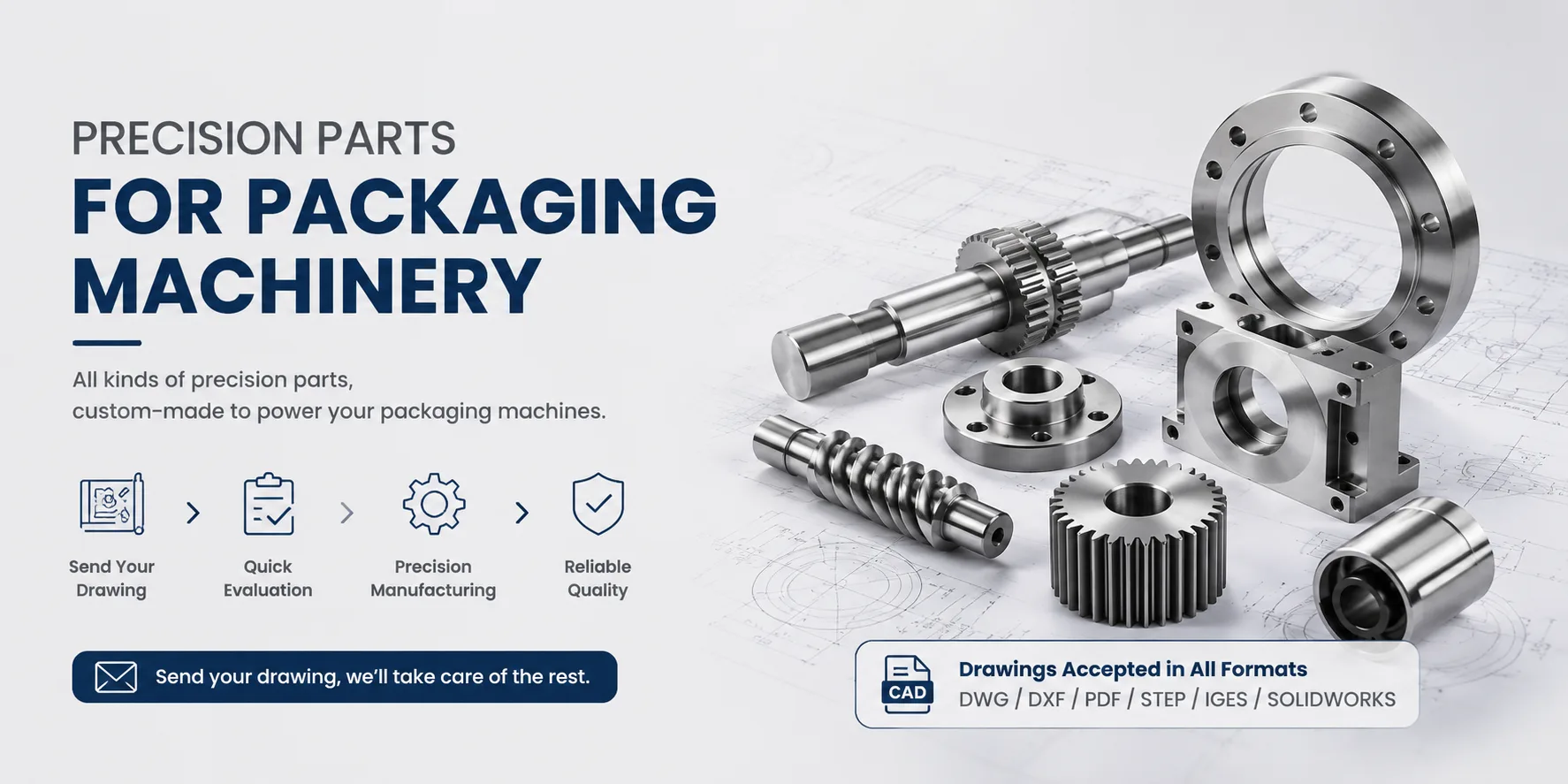
Adjust feeding speed, sealing temperature, and bag size according to powder characteristics such as particle size and flowability. For example, fine powders may require a lower feeding speed to prevent clogging, while coarse powders can be processed at higher speed. For powders with poor flowability or abrasive properties, standard feed screws may wear quickly or cause bridging. Hansheng Automation can machine custom augers, hopper liners, and filling nozzles based on supplied drawings to match specific material characteristics.
Trial Run and Debugging
Run the machine without load and observe whether all parts operate smoothly, with no abnormal noise or vibration. Test seal strength to confirm that the packaging bag meets sealing requirements.
Formal Packaging Process
Step 1: Pour powder into the hopper and start the feeding device.
Step 2: The packaging bag is conveyed to the sealing area for heat sealing or cold pressing.
Step 3: Cut the packaging bag and check that the seal is complete and free of powder leakage.
Step 4: Periodically sample finished products and record data such as weight and seal integrity.
Shutdown Procedure
Stop feeding first and wait until the powder in the hopper has been completely discharged before turning off the power. Clean residual powder, turn off the cooling system, and disconnect the power plug.
III. Common Problems and Solutions
Weak seal: Check whether heating temperature is sufficient or whether cooling time is too short.
Feeding blockage: Adjust powder particle size or clean powder adhering to the inner wall of the hopper.
Abnormal noise: Check whether bearings and chains are insufficiently lubricated and add lubricating oil in time.
IV. Summary of Operating Standards
Safety first: High-temperature and moving parts require strict protection, and improper operation must be avoided.
Precise adjustment: Set parameters according to powder characteristics to ensure packaging quality.
Regular maintenance: Cleaning, lubrication, and inspection are key to extending equipment service life.
Through standardized operation and regular maintenance, the efficiency and stability of the powder packaging machine can be significantly improved, while reducing failure rates and safety risks.