The four globally recognized leading brands in industrial robotics are Japan's FANUC and Yaskawa, Switzerland's ABB, and Germany's KUKA. These four companies each have distinct technological approaches, market positions, and industry strengths, as detailed below.
I. ABB (Switzerland)
ABB was formed in 1988 through the merger of Sweden's ASEA and Switzerland's Brown Boveri, making it the largest in terms of overall corporate size. Its core competitive advantage lies in the deep integration of motion control and automation systems, with motion control technology ranked among the world's best. ABB robots offer excellent overall performance and outstanding integration capabilities with peripheral equipment and existing production lines, maintaining a long‑standing leadership in system integration. However, its products are the most expensive among the four, and local service response is relatively slow, making it suitable for high‑end applications such as automotive body manufacturing and precision machining.
II. FANUC (Japan)
FANUC started with CNC systems in 1956 and entered the industrial robot market in 1974, forming a synergistic business portfolio of industrial automation, machine tools, and robotics. With over 240 product models and load capacities ranging from 0.5 kg to 2.3 tons, it covers diverse industry needs. Its robots are known for high precision, light weight, and compact design, though an alarm is triggered when the load reaches 80% of rated capacity. FANUC's strength lies in its self‑developed control systems and servo motors, enabling strong cost control, but its systems are relatively closed and customization capabilities are limited, making it ideal for standardized applications such as 3C electronics and food & beverage.
III. Yaskawa (Japan)
Founded in 1915 and starting with servo motors, Yaskawa operates four business divisions: drive control, motion control, system control, and robotics. Its AC servos and inverters hold the largest global market share. Yaskawa entered the Chinese market in 1996, becoming the first of the four to establish a presence in China. Yaskawa robots are known for excellent stability and high load capacity – they do not alarm even under full load – though their precision is slightly below that of FANUC. Their overall price is the lowest among the four. With deep expertise in robot joint motors and inverters, Yaskawa has significant influence in the Asian market and is well‑suited for process‑oriented applications such as arc welding and painting.
IV. KUKA (Germany)
Founded in 1898, KUKA is renowned for its automation solutions and precision robotic arm technology. It was once integrated into Siemens and later acquired by Midea, accelerating its localization efforts. KUKA leads globally in welding and stamping technologies, offering heavy‑duty robots specifically designed for automotive body manufacturing. Its control system is relatively weaker compared to peers, and its software ecosystem is less comprehensive, yet it remains competitive in automotive parts and home appliance manufacturing.
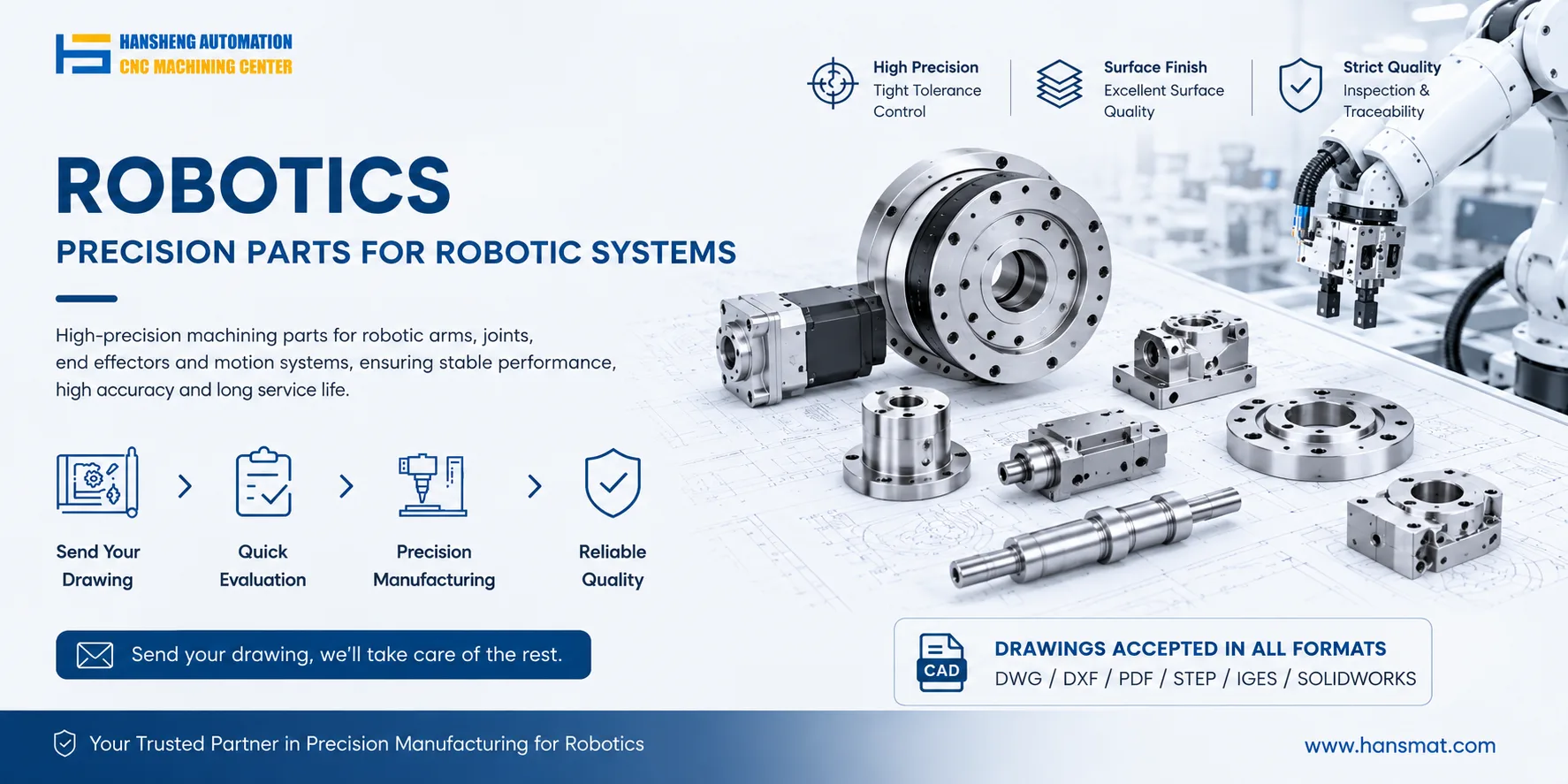
Overall, each of the four brands has its own focus. Selection should consider factors such as precision, load capacity, openness, and cost. Based on the customer's specific process requirements, we can assist in matching the most suitable robot brand and model, and also provide custom‑manufactured precision components such as end effectors and fixture tooling to support efficient implementation of automated production lines.