A fluid bed dryer (also known as a fluidized bed dryer) primarily consists of an air heating unit, fluidization chamber, air distribution plate, dust collection system (cyclone separator or bag filter), induced draft blower, and control station. Structurally, it is generally categorized into vertical and horizontal (box-type) configurations, both sharing identical thermodynamic and fluidization principles.
Working Principle and Process Features
Purified air is heated via a heat exchanger and introduced into the fluidization chamber through a bottom air distribution valve plate. Under controlled air pressure, wet materials are suspended in a fluidized "boiling" state, achieving rapid heat and mass transfer through intimate air-solid contact. This process effectively enhances powder flowability and instantaneous solubility while integrating mixing, granulation, and drying within a closed chamber. Systems typically incorporate anti-static filter media, explosion-relief vents, and dead-zone-free sanitary geometry to satisfy operational safety and GMP compliance.
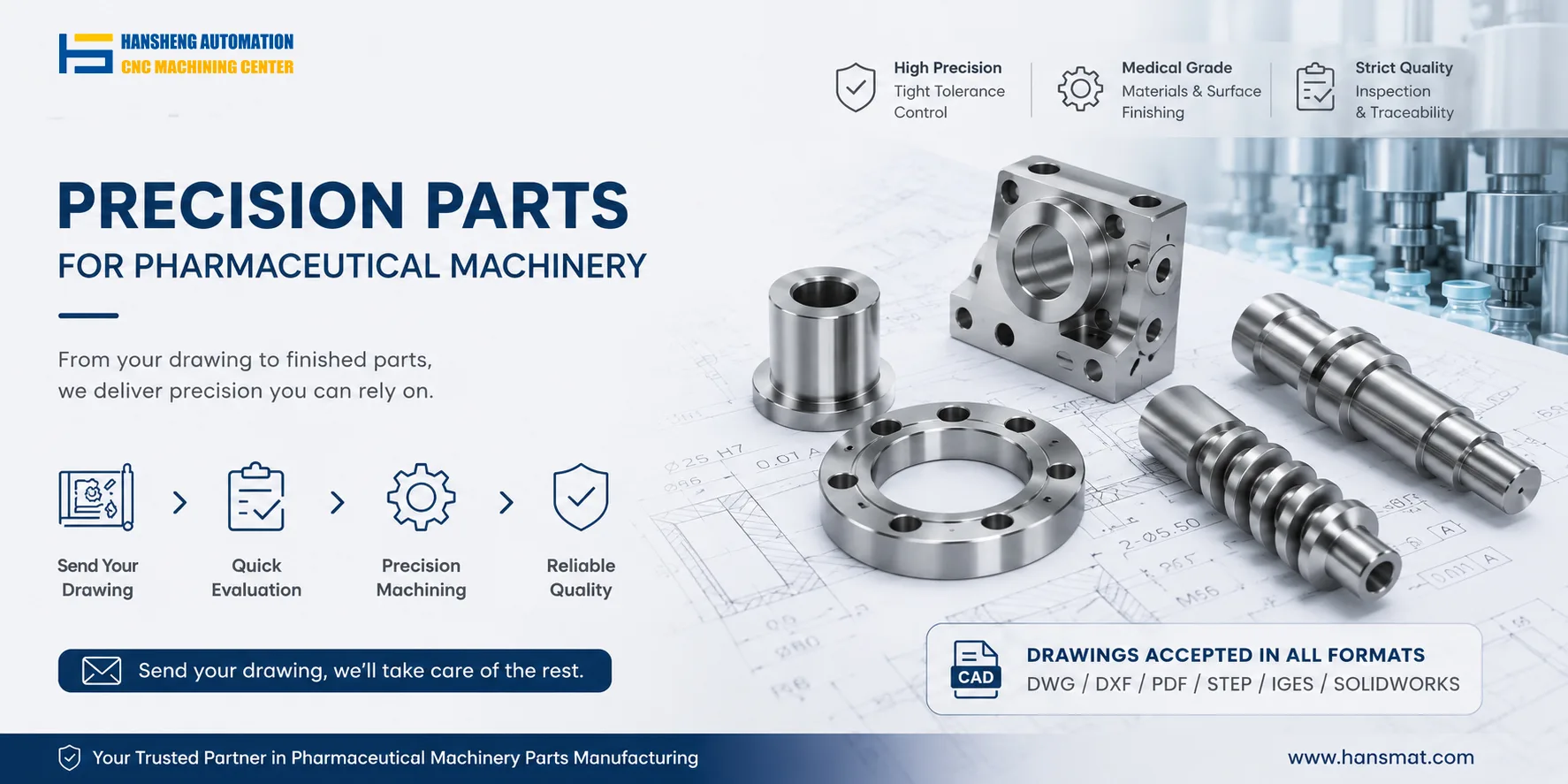
To meet strict requirements for airflow uniformity and explosion-proof sealing, Hansheng Automation custom-machines critical non-standard components-such as high-flatness air distribution plates, cyclone intake guide cones, and explosion-relief flanges-based on customer-supplied engineering drawings, ensuring precise tolerances and fine surface finishes for consistent flow stability and operational safety.