In the wet mixer granulation process, setting the main mixing impeller speed directly determines the three-dimensional mixing uniformity and the formation quality of the granules. Typically, the operating frequency of the mixing impeller ranges from 20 to 600 rpm, but the specific parameter selection must be deeply matched with material characteristics and equipment structure.
For standard conventional models, the main impeller speed is mostly set within a steady-state range of 50 to 145 rpm. Meanwhile, high-performance models equipped with stepless variable frequency drives can flexibly switch within a broad range of 50 to 500 rpm (and even up to 600 rpm). During actual production, operators usually start exploring process parameters from a low-speed range of 50-100 rpm. When dealing with high-viscosity or high-moisture powders, the speed must be gradually increased to provide sufficient mechanical thrust and shear force to break up lumps. Conversely, when processing fragile or loosely structured materials, it is advisable to maintain low speeds to prevent over-densification or the destruction of the granule morphology.
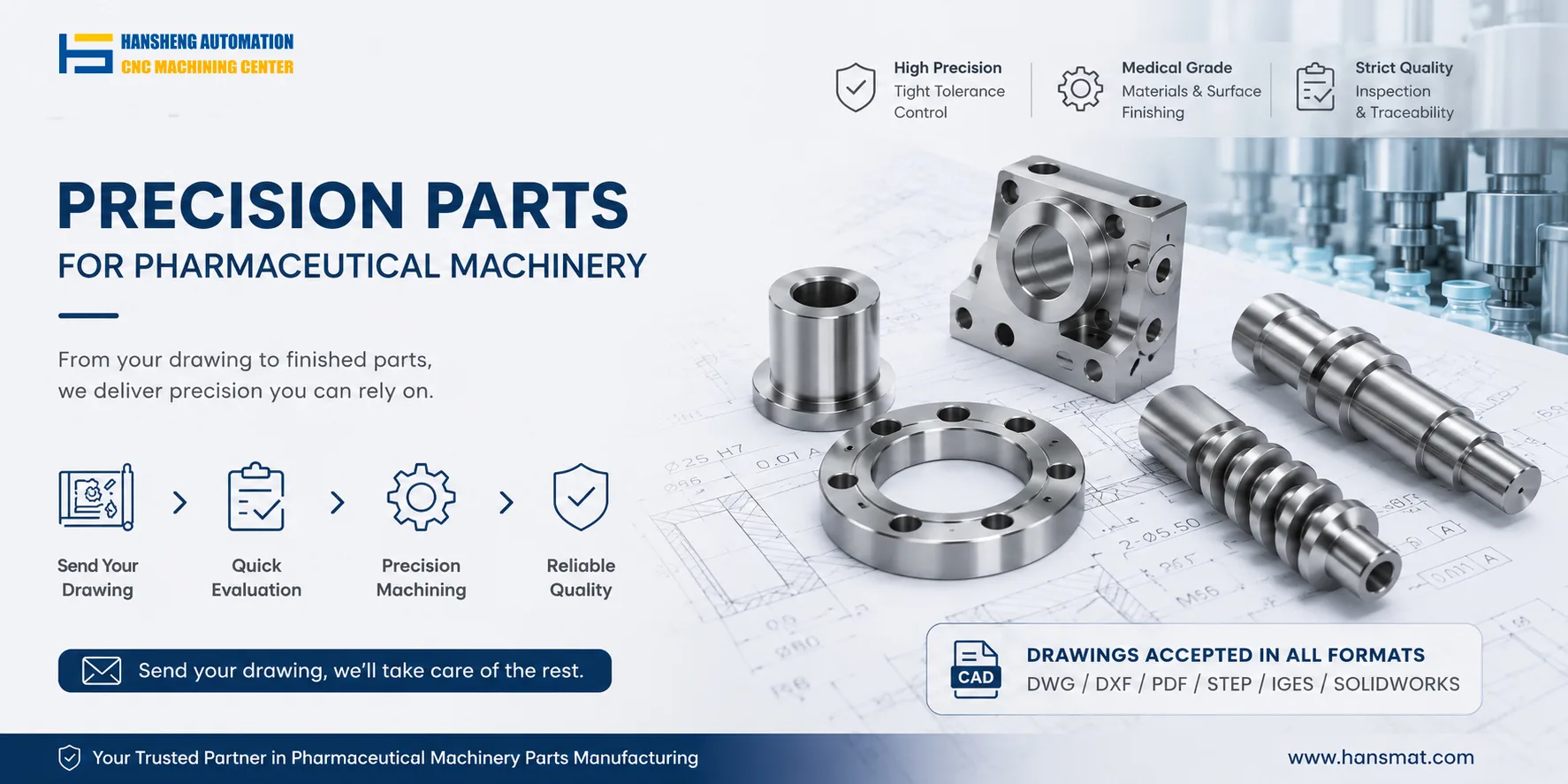
Achieving a smooth transition from low-speed, high-torque operations to high-speed, intense shearing within such a broad and variable speed range poses a severe test to the streamlined surface design and machining precision of the underlying mixing impeller. Tailored to equipment configurations with different granulation objectives, we can perform single-piece or low-volume precision machining of core granulator components based on customer design drawings. Hansheng Automation supports the exact manufacturing of various non-standard mixing impellers and underlying main drive shafts according to your prints. Whether you require a miniature high-speed impeller for small-volume laboratory equipment or a heavy-duty multi-blade impeller set for large-capacity production models, we utilize premium 316L stainless steel or special wear-resistant alloys for multi-axis CNC precision milling.
By polishing the blade surfaces to a pharmaceutical-grade mirror finish (Ra ≤ 0.4μm) and strictly controlling micron-level concentricity and dynamic balance tolerances, our custom-machined mixing components can effectively withstand the alternating stresses caused by frequent stepless speed adjustments. Our robust machining capabilities not only thoroughly eliminate the risk of eccentric runout during high-speed operations but also provide a stable and sturdy hardware foundation for various pharmaceutical and chemical machinery manufacturers, ensuring that the equipment precisely executes process commands at any speed setting.