Side-seal and pillow-type packaging machines are both continuous heat-sealing systems, but they differ fundamentally in design, product suitability, package style, and production context. Pillow machines are more versatile for small individual items, while side-seal units better handle large or multi‑piece bundled packages.
1. Structure & Operating Principle
Pillow-type machine: Uses tubular film. A former folds flat film into a cylinder; products are fed into the tube, then longitudinal sealing closes the side seam, and transverse sealing cuts and seals both ends. Precise synchronization of feeding, forming, and sealing is essential.
Side-seal machine: Works with flat or folded film directly over the product, without pre‑forming a tube. Side sealing and cutting modules complete three or four sides in one operation. Most models include automatic film feeding and product positioning; heavy‑duty versions handle oversized items.
2. Suitable Product Range
Pillow-type: Ideal for regular, small, elongated items – e.g., bread, sausages, biscuits, screws, electronic components, stationery. Typical size limits: length ≤1000 mm, width ≤300 mm, height ≤200 mm; limited to single or few items per pack.
Side-seal: Suited for large, irregular, or bundled products – e.g., cartons, gift boxes, large hardware, or batch‑packed small parts. Extra‑large models can handle lengths ≥2000 mm and bundle dozens of pieces together.
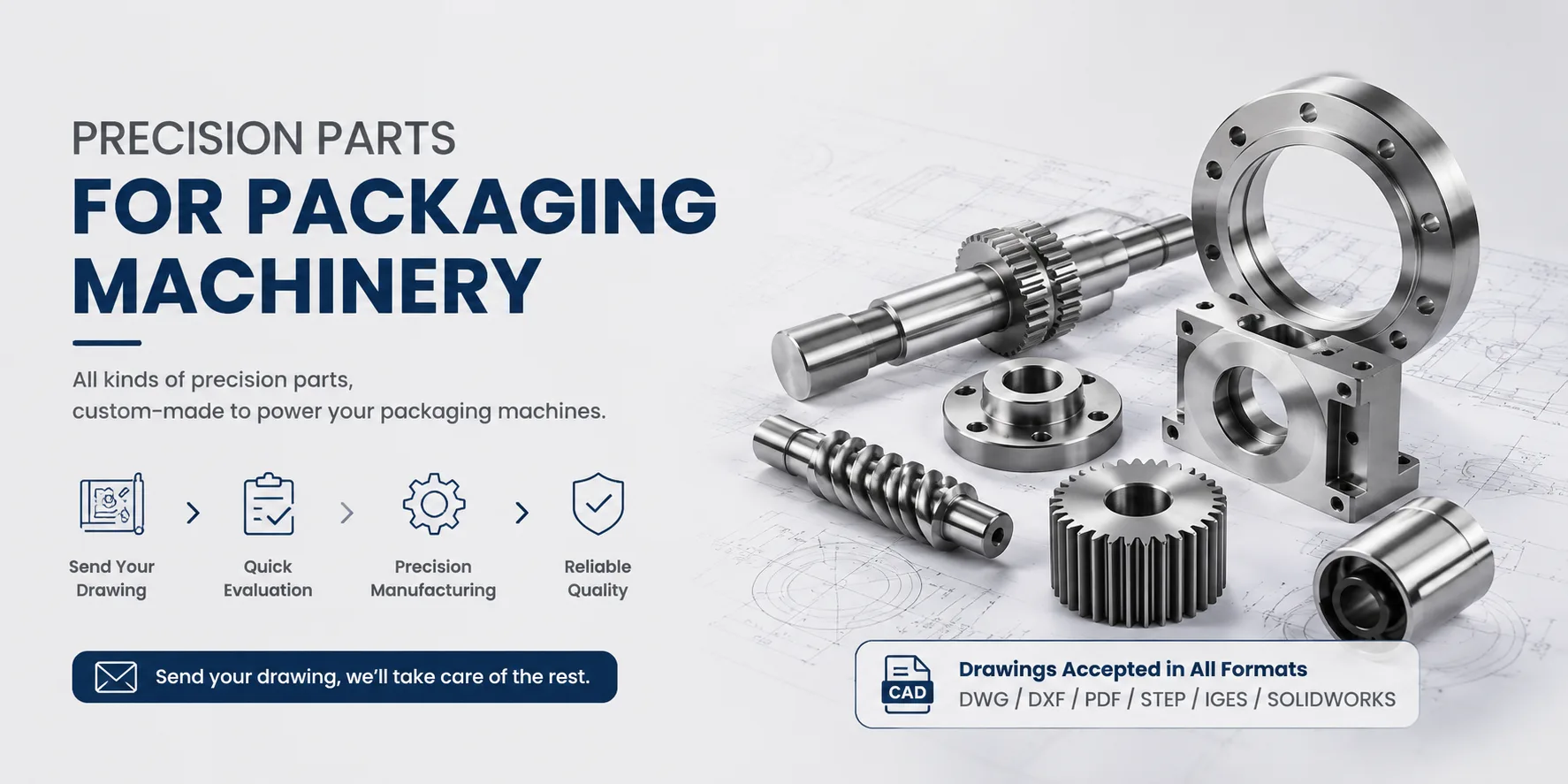
When standard sizes fall short, tailored replacement parts (e.g., sealing jaws, guides, heater holders) can be manufactured to your drawings – available in single or small batches, in materials like SKD11, DC53, or HSS, with coatings such as chrome or nitriding – to expand machine compatibility without changing the whole unit.
3. Package Style
Pillow-type: Produces a pillow‑shaped bag with a longitudinal side seam and transverse end seals, film fully wrapped around the product with neat allowances. Uniform appearance, suitable for retail display.
Side-seal: Yields a flat three‑ or four‑side sealed pouch, film closely conforming to the product shape, seams concentrated on sides or bottom – minimal excess material, ideal for protective transit packaging.
4. Production Speed & Typical Applications
Pillow-type: High speed – typically 80–300 packs/min – ideal for high‑volume continuous lines in food, hardware, and electronics plants; easily integrates with upstream filling and weighing.
Side-seal: Slower, usually 10–60 packs/min, operating in intermittent or semi‑continuous mode. Common in e‑commerce fulfillment, finished‑good transit packing, and automated collation with conveyor systems.
5. Selection & Maintenance Notes
Choice depends on product dimensions, film type, throughput, and logistics needs. Pillow machines offer more flexibility for frequent size changes; side‑seal units excel at bulky or irregular loads.
Whichever type you use, seal quality and reliability heavily depend on the precision and material of heating elements, cutter blades, pressure rollers, and drive parts. If wear or non‑standard dimensions affect your sealing performance, we offer custom‑machined components per your drawings – for both machine types – to extend service life and upgrade output quality without replacing the entire equipment. Always refer to your machine manual and on‑site safety protocols for specific adjustments.