The fundamental distinction between GL and GLG series equipment lies in the structural transition from a standalone unit to an integrated, closed-loop production line:
1. System Architecture and Process Integration
GL Series: Primarily refers to a standalone fluid bed granulator/dryer designed to handle batch fluidization, top-spray agglomeration, and drying within a single processing chamber.
GLG Series: Represents a next-generation integrated system. It links a high-shear wet mixer-granulator (e.g., HLSG series), a fluid bed dryer (e.g., FG-C series), a multi-function sizing mill (e.g., GZL series), and vacuum transfer auxiliaries into an automated line that performs mixing, wet granulation, fluid bed drying, and inline sizing sequentially.
2. Throughput Efficiency and Containment Performance
By connecting individual machines via enclosed transfer piping, the GLG line eliminates manual handling between process steps. This minimizes dust emission and cross-contamination risks while ensuring tight granule size distribution and high batch-to-batch repeatability for solid dosage forms (TCM granules, synthetic drug tablets, and capsules).
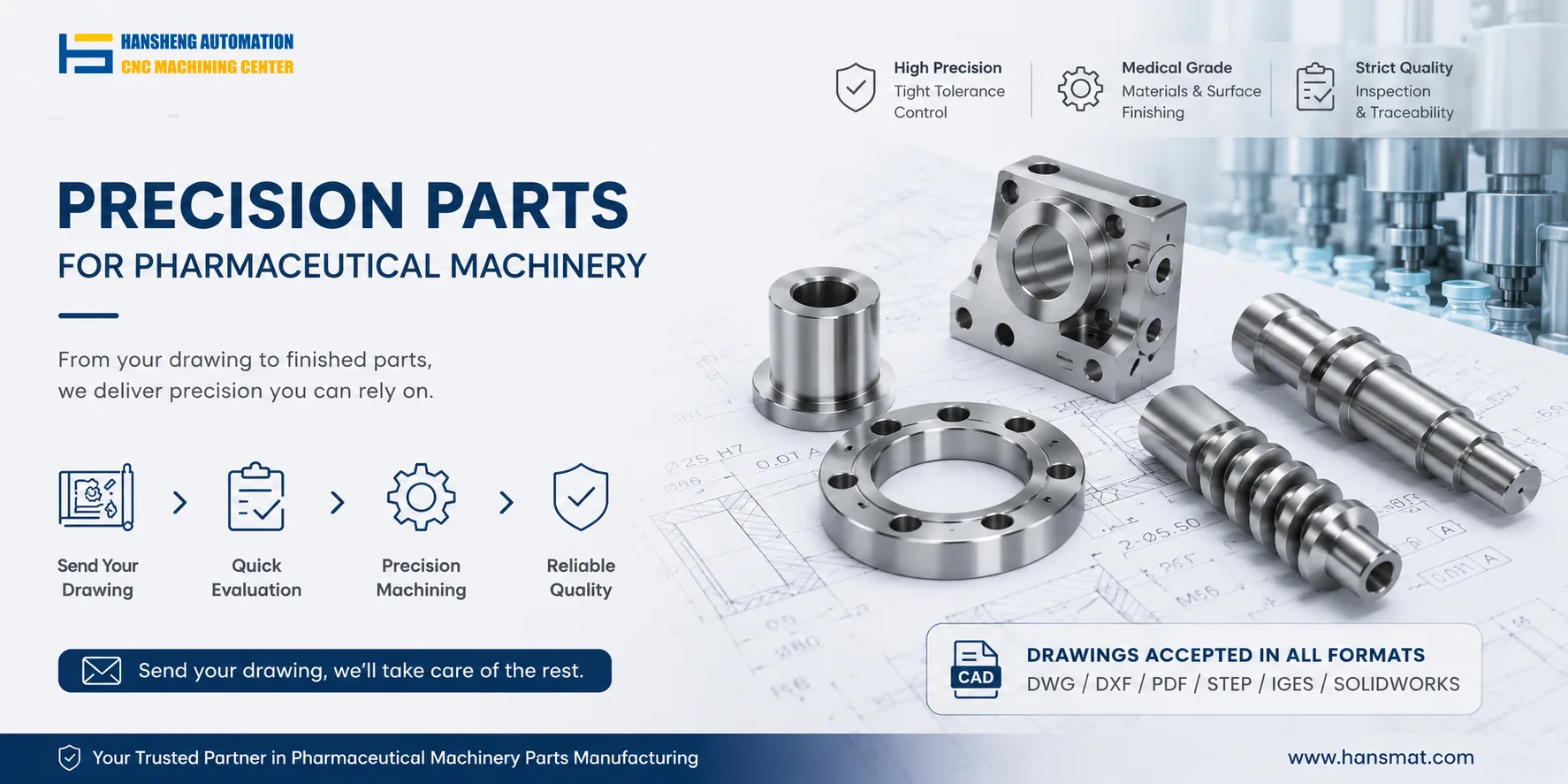
To ensure smooth, dust-tight material transfer across linked units, Hansheng Automation custom-machines critical non-standard components-such as sanitary quick-release connecting flanges, pneumatic transfer pipe couplings, precision perforated sizing screens, and diverter valve spools-based on customer-supplied interface drawings, ensuring accurate dimensional fit and dependable sealing across modular assemblies.