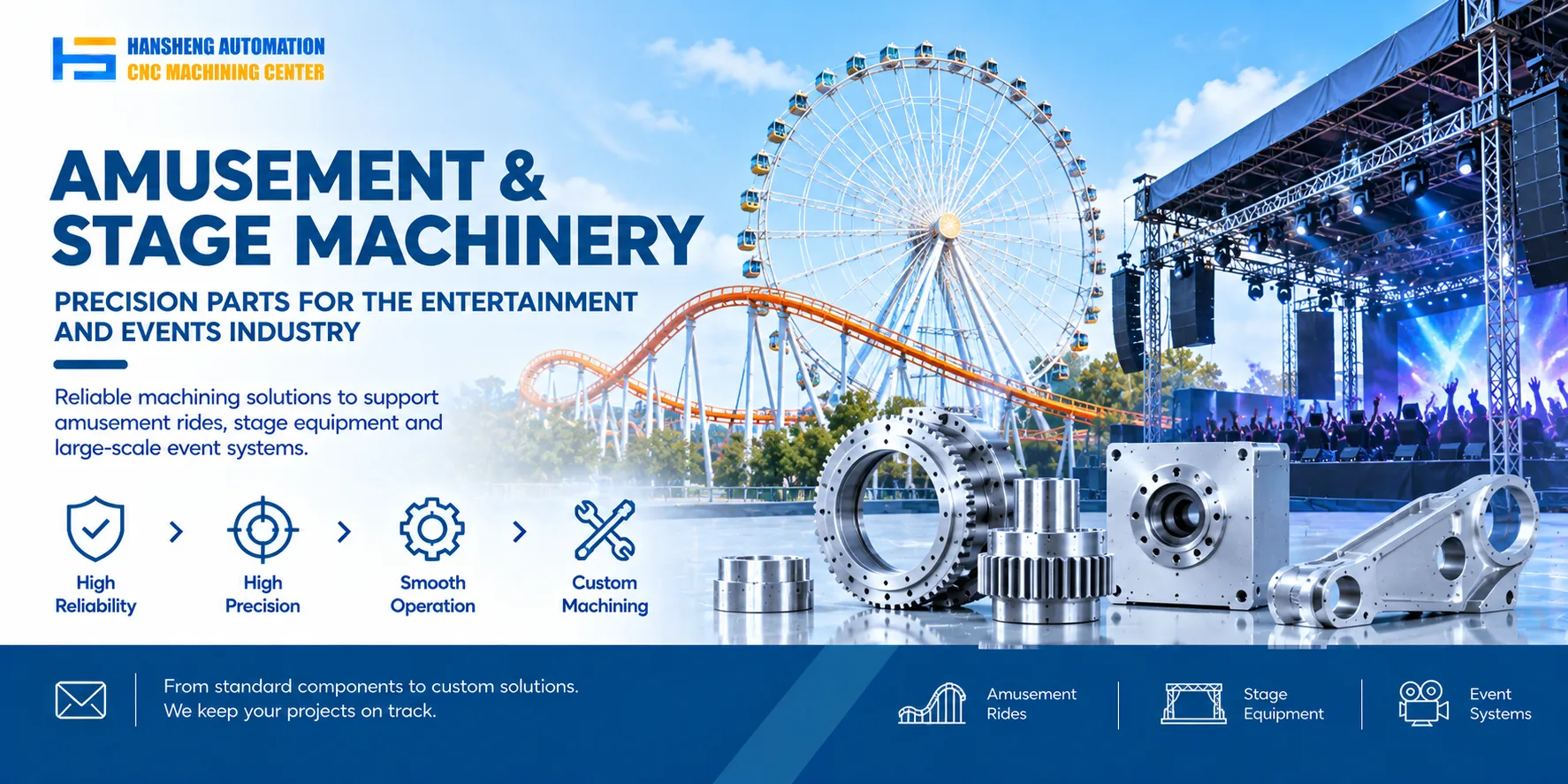
A slewing bearing is a large-diameter rolling bearing designed for machinery that requires rotational movement around a central axis. Unlike conventional bearings, it can accommodate combined axial loads, radial loads, and tilting moments. It is commonly used in low-speed slewing, intermittent rotation, and continuous rotation applications.
Slewing bearings are generally bolted between the stationary and rotating structures of a machine. They do not require a separate shaft and bearing housing arrangement like conventional rolling bearings. Their main components include an inner ring, an outer ring, rolling elements, a cage or spacers, seals, and lubrication components. Some designs also incorporate an internal or external gear into one of the bearing rings.
Main Components of a Slewing Bearing
The internal design of a slewing bearing depends on its bearing type, load requirements, and installation arrangement. Common components include the following.
Inner and Outer Rings
The inner and outer rings form the main load-bearing structure of a slewing bearing. They are generally manufactured from high-strength steel. The raceway areas undergo heat treatment and precision machining to withstand rolling contact and transmit operating loads.
The two rings are bolted to adjacent machine structures. One ring connects to the stationary structure, while the other connects to the rotating structure. Their relative movement is supported by the rolling elements.
The inner ring is not always stationary, nor is the outer ring necessarily the rotating component. Their connection arrangements depend on the machine structure and power transmission design.
Some slewing bearings have gear teeth machined into one of the rings, forming an internal or external gear arrangement. A drive pinion engages with these teeth to transmit rotational power. Other models have no gear and rely on a separate drive mechanism.
Rolling Elements and Raceways
Rolling elements are installed between the inner and outer rings. They are responsible for transmitting axial loads, radial loads, and tilting moments.
Common rolling elements include steel balls and rollers.
Steel balls: Commonly used in four-point contact ball slewing bearings. The balls contact the raceways at four points. Depending on the bearing design, this arrangement can accommodate axial loads, radial loads, and tilting moments simultaneously. It offers smooth rotational movement and is suitable for many light and medium-duty applications.
Rollers: Common types include cylindrical rollers and crossed cylindrical rollers. Rollers form line contact with the raceways. Under comparable dimensional conditions, certain roller arrangements provide higher stiffness and load capacity, making them suitable for applications with more demanding load requirements.
The raceways are generally hardened and precision-ground to improve surface quality and load-carrying performance. The rolling elements move along the raceways, reducing friction between the inner and outer rings.
According to the arrangement of the rolling elements and the internal design, slewing bearings are available in several configurations, including single-row four-point contact ball, double-row ball, single-row crossed roller, and triple-row roller designs. Their axial, radial, and moment load capacities differ, so the bearing type must be selected according to the actual operating loads.
Cages and Spacers
Cages or spacers control the relative positions of the rolling elements. They help prevent unnecessary contact between adjacent rolling elements and maintain suitable spacing within the raceways.
Depending on the bearing design, these components may be made of polyamide or metal, or supplied as separate spacer elements.
Not all slewing bearings use the same separation arrangement. Some designs use a full complement of rolling elements, while others use window-type cages or individual spacers. The choice depends on the number of rolling elements, load requirements, and available internal space.
Sealing Arrangements
Seals are generally installed in the gaps between the inner and outer rings. Their main function is to prevent dust, moisture, sand, and other contaminants from entering the raceways while retaining the internal lubricant.
Common designs use rubber lip seals. The sealing material should be selected according to operating temperature, moisture exposure, and environmental conditions.
Applications involving port machinery, offshore equipment, and outdoor construction machinery may expose the bearing to water, dust, and corrosive substances. Seal material, sealing geometry, and protection requirements must be considered during selection.
After prolonged operation, seals may deteriorate, crack, or wear. They should be inspected regularly and replaced when necessary.
Lubrication System
Slewing bearings require lubrication to reduce friction and wear between the rolling elements and raceways. Common lubrication components include grease fittings, internal lubrication passages, and designated lubrication points.
Grease is supplied through the fittings to form a lubricating film between the rolling elements and raceways.
For slewing bearings with integrated gear teeth, raceway lubrication and gear lubrication should be considered separately. The gear mesh generally requires its own lubrication arrangement, depending on the gear design and manufacturer's recommendations.
Large machinery may also use a centralized lubrication system. This supplies measured amounts of grease to multiple lubrication points through a network of pipes, reducing manual maintenance work.
Common Types of Slewing Bearings
Slewing bearings differ in rolling element arrangement, raceway design, and load-carrying characteristics. Selection generally depends on combined loading conditions, rotational accuracy, and available installation space.
Single-Row Four-Point Contact Ball Slewing Bearings
This type generally uses one row of steel balls. Each ball contacts the inner and outer raceways at four points, allowing the bearing to accommodate axial loads, radial loads, and tilting moments simultaneously.
Its compact structure makes it suitable for excavators, cranes, rotary tables, and other machinery with light to medium load requirements.
Double-Row Ball Slewing Bearings
Double-row ball slewing bearings use two rows of steel balls and can provide higher load capacity, depending on their design. They are suitable for applications requiring increased load capacity within limited installation space.
Some wind turbine pitch systems use double-row ball bearings or other specially designed slewing bearing arrangements.
Single-Row Crossed Roller Slewing Bearings
Crossed roller slewing bearings use cylindrical rollers arranged alternately at 90-degree orientations.
This arrangement accommodates loads from multiple directions and provides good stiffness and rotational accuracy. It is commonly used in precision rotary tables, industrial robots, and machinery requiring controlled rotational clearance.
Triple-Row Roller Slewing Bearings
Triple-row roller slewing bearings use three sets of rollers and corresponding raceways. The roller sets generally support axial and radial loads separately.
This design provides high load capacity and is suitable for large cranes, heavy construction machinery, and equipment exposed to substantial tilting moments.
Main Applications of Slewing Bearings
Slewing bearings provide a large support diameter and substantial combined load capacity within a relatively compact installation space. They are therefore used in machinery and industrial equipment requiring rotational movement.
Construction Machinery
Excavators, truck cranes, tower cranes, crawler cranes, and rotary drilling rigs commonly use slewing bearings.
In an excavator, the slewing bearing is installed between the upper structure and lower undercarriage. It allows the cab, engine, and working equipment to rotate relative to the tracked chassis.
In cranes, the bearing supports the upper structure and the loads generated by the boom. It accommodates axial loads, radial loads, and tilting moments, allowing the crane to slew within its specified operating range.
Port Handling Equipment
Portal cranes, port cranes, stacker-reclaimers, and large bulk material handling equipment often require slewing mechanisms to change their operating direction.
The slewing bearing is installed between the rotating platform and the fixed support structure. It carries the loads from the upper structure and material being handled while allowing the boom or conveying equipment to rotate.
These machines often operate under heavy loads and may be exposed to sea air, moisture, and salt spray. Load capacity, sealing arrangements, and corrosion protection must therefore be considered during bearing selection.
Metallurgical Equipment
Slewing bearings can be used in steel ladle turrets, continuous casting tundish turning equipment, and certain large metallurgical rotating mechanisms.
For example, a ladle turret rotates the ladle and its supporting structure between different operating positions. A slewing bearing provides the required support and rotational movement. The bearing type must be selected according to ladle weight, eccentric loading, operating temperature, and equipment dimensions.
Not all steelmaking converters or rolling mills use standard slewing bearings. Some machines require specially designed trunnion bearings or other support arrangements.
Wind Turbines
Slewing bearings are used in the yaw and pitch systems of wind turbines.
The yaw bearing is installed between the nacelle and tower. It allows the nacelle to rotate according to wind direction so that the rotor remains properly aligned with the wind.
Pitch bearings are installed between the hub and the blade roots. They allow each blade to rotate around its longitudinal axis, adjusting the blade angle to control rotor operation.
Both applications place demanding requirements on load capacity, fatigue life, sealing performance, and operating reliability.
Amusement Rides
Ferris wheels, carousels, and other large rotating amusement rides may use slewing bearings to support their rotating structures.
For example, certain Ferris wheel designs use large slewing bearings to support the wheel assembly and allow it to rotate around its central support.
For passenger-carrying amusement rides, the bearing must meet both static and dynamic load requirements. Its design must also be coordinated with the drive, braking, and safety protection systems.
Other Industrial Equipment
Slewing bearings are also used in tunnel boring machines, solar tracking systems, industrial robots, rotary tables, and large material stackers and reclaimers.
Each application has different requirements for rotational accuracy, starting frequency, load direction, and service life. Bearing selection should therefore be based on actual operating conditions rather than the equipment category alone.
Slewing Bearing Installation Methods
The mounting arrangement depends on the direction of the applied loads, machine structure, and available installation space. It is important to distinguish between the support arrangement and the orientation of the bearing. These are two different design considerations.
Supported Mounting
Supported mounting places the slewing bearing on a lower support structure, with the upper ring connected to the rotating component.
During operation, part of the axial load is transferred through the bearing support surfaces to the lower structure. The mounting bolts maintain the required clamping force according to the design specifications.
This arrangement is widely used in cranes, excavators, and rotary tables.
Suspended Mounting
Suspended mounting generally places the slewing bearing beneath an upper support structure, with the lower rotating component connected through the bearing.
Compared with supported mounting, this arrangement may increase the tensile load on the mounting bolts under axial loading. Bolt strength, preload, and support structure stiffness must therefore be carefully evaluated.
Suspended mounting is used in certain slewing mechanisms with specific space or load transmission requirements.
Horizontal, Vertical, and Inclined Mounting Orientations
In addition to the support arrangement, the bearing orientation must be determined according to the machine's rotational axis.
Horizontal mounting: The bearing mounting plane is approximately horizontal, with the rotational axis generally vertical. This arrangement is common in cranes and excavators.
Vertical mounting: The mounting plane is approximately vertical, with the rotational axis generally horizontal. It is used in certain vertical rotary machines and special slewing mechanisms.
Inclined mounting: The bearing is installed at an angle according to the machine structure. The applied loads and structural deformation must be evaluated for the specific arrangement.
Regardless of the mounting orientation, the inner and outer rings must be installed with suitable dimensional accuracy and support stiffness.
Slewing Bearing Installation and Maintenance Requirements
Although slewing bearings can accommodate substantial combined loads, their actual load-carrying performance depends on the mounting structure, attachment bolts, lubrication, and operating conditions.
Before installation, the supporting surfaces should be checked for flatness, cleanliness, and structural stiffness. Burrs and foreign materials must be removed to prevent uneven loading and localized stress on the raceways.
During installation, the attachment bolts must comply with the manufacturer's specifications. The specified preload and staged tightening procedure should be followed to achieve uniform clamping around the bearing circumference. For geared slewing bearings, the backlash between the drive pinion and ring gear must also be checked.
During operation, a lubrication schedule should be established according to the working conditions. Seals, raceways, gear teeth, and attachment bolts require regular inspection. Inspection intervals may need to be shortened in heavy-duty, dusty, or wet environments.
When localized binding, abnormal noise, increased vibration, or changes in rotational resistance occur, the supporting structure, gear engagement, bearing clearance, and lubrication condition should be checked. Adding grease alone is not an appropriate solution for every operating problem.
Custom Machining for Slewing Equipment
A slewing bearing consists of inner and outer rings, rolling elements, raceways, cages or spacers, seals, and lubrication components. Some models also incorporate internal or external gear teeth. Its primary function is to accommodate axial loads, radial loads, and tilting moments while providing rotational support for large machinery.
From construction and port handling equipment to wind turbines and amusement rides, the selection of a slewing bearing depends on actual loads, mounting orientation, rotational accuracy, and operating conditions.
For components used in slewing equipment and related machinery, we provide custom precision machining based on customer-supplied drawings. Hansheng Automation also manufactures precision yacht components, structural parts for radio-controlled racing cars, and non-standard components for tobacco packaging machinery and filling machinery. We support single-piece and small-batch production according to component geometry, dimensions, and assembly requirements.