

What is PTFE?
PTFE, or polytetrafluoroethylene, is a high-performance fluoropolymer composed of carbon and fluorine atoms. Discovered accidentally by DuPont scientist Dr. Plunkett in 1938, it was commercialized under the trademark "Teflon™" in 1947 and has since become one of the world's most renowned high-performance materials. As a unique PTFE material, its molecular structure features a [CF₂-CF₂]ₙ backbone, and the "protective sheath" formed by fluorine atoms endows it with a range of exceptional properties.
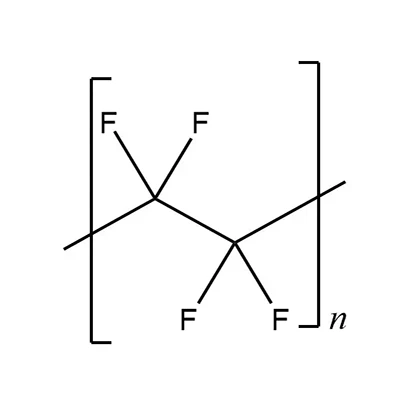
Core characteristics of PTFE: Why is it the "universal material" of industry?
As a high-performance polytetrafluoroethylene material, PTFE's advantages stem from its unique molecular structure, primarily including:
1.Extreme chemical resistance: It withstands corrosion from nearly all chemicals, with only a few exceptions such as molten alkali metals and high-temperature fluorine gas, making it an ideal choice for chemical equipment.
2.Wide temperature range stability: It can be used long-term at extreme temperatures from -200°C to 260°C and can withstand short-term temperatures up to 440°C, making it suitable for aerospace and high-temperature industrial applications.
3.Ultra-low friction coefficient: Dynamic friction coefficient as low as 0.04, one of the lowest among known solid materials, far exceeding most engineering plastics, making it suitable for sliding components.
4.Excellent electrical insulation: Dielectric constant of only 2.0, dielectric strength of 19.7 kV/mm, maintaining stability in high-frequency and high-temperature environments, making it the preferred material for electronic insulation.
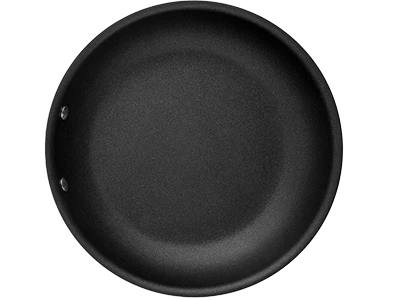
5.Non-stick properties and low water absorption: Extremely low surface tension, making it virtually non-stick to any substance (this is also the core reason why Teflon coatings are used in non-stick pans), and a water absorption rate below 0.01%, making it suitable for humid environments.
What are the grades of polytetrafluoroethylene?
| Grade | Features |
|---|---|
| Virgin PTFE | Unfilled; one of the most chemically inert materials known, used across multiple industries. |
| Glass Filled PTFE | Contains 25% glass fiber filler; significantly increases compressive strength and reduces deformation under load. |
| Bronze Filled PTFE | Bronze added; improves dimensional stability and reduces creep, cold flow, and wear. |
| Carbon Filled PTFE | Carbon fiber added; enhances compressive strength and abrasion resistance, with good thermal conductivity and low permeability. |
| Stainless Steel Filled PTFE | Highly wear-resistant; exhibits excellent strength and stability under extreme loads and high temperatures, while retaining the low coefficient of friction of conventional PTFE. |
Core characteristics
| Performance Category | Specifications | Industrial Significance |
|---|---|---|
| Glass Transition Temperature | 114.85°C (388.00 K) | Below this temperature, the material is glassy; above it, it exhibits flexibility, affecting low-temperature applications. |
| Continuous Service Temperature | -200°C to 260°C (short-term up to 440°C) | Covers extreme environments from polar low temperatures to industrial high temperatures, suitable for aerospace, deep-sea exploration, etc. |
| Coefficient of Thermal Expansion (CTE) | 112–125×10⁻⁶ K⁻¹ | Poor dimensional stability under temperature changes; fillers (e.g., carbon fiber) are needed to reduce expansion and improve machining precision. |
| Coefficient of Friction | 0.05–0.10 | Only higher than aluminum boride (BAM) and diamond-like carbon, making it ideal for mechanical sliding components (e.g., bearings, guide rails). |
| Dielectric Constant | E=2.1 (at 60Hz) | Stable insulating properties in high-frequency environments, used for insulating layers in radar, satellites, and other electronic devices. |
| Dielectric Strength (at 1 MHz) | 60 MV/m | High resistance to voltage breakdown, suitable for insulation protection in high-voltage electrical equipment. |
| Chemical Resistance | Only affected by a few substances such as molten alkali metals and high-temperature fluorine gas. | Core material for chemical pipelines and reactor linings, solving equipment wear issues caused by highly corrosive media. |
| Water Absorption | <0.01% | Stable performance in humid environments (e.g., subsea equipment, food processing), with no risk of swelling or degradation. |
These qualities make PTFE (PTFE polytetrafluoroethylene) a "universal material" that can be used in many fields. For example, it can be used in Teflon non-stick pans in home kitchens (using its non-stick properties), acid-resistant pipes in chemical plants (using its chemical resistance), and high-temperature insulation parts in spacecraft (using its temperature resistance). Its uses are almost endless.
PTFE CNC Machining: Key Technologies for Precisely Mastering "Difficult-to-Machine Materials"
PTFE has extremely high melt viscosity (almost non-flowing), and traditional injection molding or extrusion processes can only produce simple shapes (such as sheets or rods). The machining of complex parts heavily relies on CNC technology. Whether it is pure PTFE or filled PTFE materials, CNC machining can achieve micron-level precision. The specific advantages and details are as follows:
1. Types of PTFE Suitable for CNC Machining
| Pure PTFE (Virgin PTFE) | Soft in texture, easy to machine, but with weaker creep resistance, suitable for processing simple structures (such as gaskets, seals), requiring control of cutting speed (recommended 200-500 rpm) to prevent material deformation. |
| Filled PTFE | Enhanced mechanical properties through the addition of fillers such as glass fiber, bronze, or carbon fiber, making it more suitable for CNC machining of complex parts. |
| Glass fiber-filled PTFE | 30% increase in compressive strength and 50% improvement in wear resistance, commonly used for machining sealing rings for high-pressure valves. |
| Carbon fiber-filled PTFE |
40% reduction in thermal expansion coefficient and 2x improvement in thermal conductivity, suitable for machining guide rails and slides for precision instruments. |
| Bronze-filled PTFE | 2x increase in hardness, suitable for machining bearing sleeves capable of withstanding heavy loads, widely used in automotive shock absorbers. |
2. Core processes and precautions for CNC machining
Process types: Primarily achieved through CNC milling (processing flat surfaces and curved surfaces), turning (processing shaft-type parts), and drilling (processing through holes/blind holes), enabling PTFE blanks to be machined into precision components with tolerances of ±0.01mm.
Key Parameter Control:
Cutting Speed: Pure PTFE is recommended at 100-300 m/min; filled PTFE can be increased to 300-500 m/min (fillers enhance material rigidity);
Cooling Method: Use air cooling (to avoid water cooling causing material absorption), ensuring the processing area temperature does not exceed 260°C (the critical temperature at which PTFE begins to decompose);
Clamping method: Use soft clamps (e.g., rubber-coated) to prevent surface scratches or material deformation caused by excessive clamping force.
Application Scenarios
1. Coating Applications: Polytetrafluoroethylene (PTFE) Coating
Civil Use: Teflon coatings on non-stick pans and oven liners utilize their non-stick properties and ability to withstand high temperatures up to 260°C to prevent food from sticking;
Industrial: Mold surface coatings (e.g., rubber molds) to reduce demolding resistance; PTFE coatings on guide rollers in textile machinery to minimize thread wear.
2. Mechanical and Chemical Engineering Applications: CNC-machined PTFE components
Sealing components: CNC-machined PTFE V-rings and O-rings achieve zero leakage at acid-alkali pipeline interfaces (combining chemical resistance and elasticity);
Sliding components: bearings made from filled PTFE, capable of continuous operation for over 100,000 hours without lubrication, with a lifespan 5-10 times longer than metal bearings;
Chemical equipment: PTFE-lined reactors and stirrers, resistant to strong corrosive media such as 98% concentrated sulfuric acid and concentrated nitric acid, extending equipment maintenance cycles to over five years.
3. Electronics and medical fields: High-performance "invisible support"
Electrical insulation: PTFE insulation layers in high-frequency cables maintain signal stability in 5G base stations and radar equipment (low dielectric constant, minimal signal loss);
Medical Implants: Pure PTFE exhibits excellent biocompatibility, processed via CNC machining into heart valves and artificial blood vessels, which do not react with human tissues and resist corrosion from bodily fluids.
Recommendations for Selecting PTFE Materials
Pure PTFE is suitable for low-load, simple shapes (e.g., gaskets); Filled PTFE is suitable for high-load, complex structures (e.g., gears, rails), and can achieve high precision through CNC machining;
CNC machining efficiency for filled PTFE is 20-30% higher than pure PTFE (better rigidity, more stable cutting), but material costs increase by 10-50% (depending on the type of filler);
Long-term exposure to temperatures above 260°C can cause PTFE to decompose (releasing toxic gases), so it must be used with an insulating layer; Avoid using it in radiation environments (such as the nuclear industry) due to low radiation resistance (it fractures at 0.02 Mrad).
PTFE (polytetrafluoroethylene), often referred to as the "all-purpose material," derives its value not only from its chemical resistance, high/low temperature tolerance, and low friction properties but also from its ability to overcome form limitations through CNC machining, enabling applications ranging from simple coatings to precision parts across all scenarios. Whether it's Teflon coatings in home kitchens or CNC-machined PTFE components in aerospace equipment, this material consistently demonstrates its core advantage of "stability and reliability" in extreme environments.
If you require custom CNC-machined PTFE parts or need guidance on selecting filled PTFE materials, please contact us for a one-stop solution from material selection to manufacturing implementation.
FAQ
Q: What is the difference between PTFE and Teflon?
A: PTFE (polytetrafluoroethylene) is the chemical name of the polymer, while Teflon™ is a brand trademark owned by DuPont for PTFE-based products. In short, Teflon is a specific brand of PTFE, and the two are often used interchangeably in daily language.
Q: What is the maximum temperature PTFE can withstand?
A: PTFE has excellent thermal stability. It can be used continuously at temperatures up to 260°C (500°F) and can withstand short-term exposure to 440°C (824°F). However, it begins to decompose above 260°C, so long-term use beyond the continuous temperature limit is not recommended.
Q: What is the precision of CNC machining for PTFE parts?
A: CNC machining can achieve high precision for PTFE, with typical tolerances as tight as ±0.01mm. For filled PTFE (e.g., glass fiber or carbon fiber filled), the improved rigidity further enhances dimensional stability, making it suitable for parts requiring strict precision (such as sealing rings in high-pressure valves).
Q: How does filled PTFE differ from virgin PTFE in terms of performance?
A: Virgin PTFE has excellent chemical resistance and low friction but is relatively soft and prone to creep under load. Filled PTFE (e.g., with glass fiber, bronze, or carbon fiber) retains the core properties of PTFE while significantly improving mechanical strength (e.g., 30% higher compressive strength) and creep resistance, making it more suitable for CNC machining of complex, high-load parts.
Q: Is PTFE safe for food contact applications?
A: Yes. Pure PTFE is inert, non-toxic, and meets food safety standards (e.g., FDA regulations). This is why PTFE coatings (polytetrafluoroethylene coating) are widely used in non-stick cookware, food processing equipment, and food-grade seals.