Installing a bottle divider on a glass bottle packaging machine requires more than simply fixing the unit to the conveyor. The mounting position, bottle path, dividing mechanism, and electrical signals all need to match the packaging machine correctly. A proper installation generally involves preparation, mechanical mounting, alignment, electrical connection, and trial adjustment.
For packaging machines with non-standard mounting interfaces or bottle-handling configurations, the installation requirements may also vary. In such cases, the dimensions of mounting plates, shafts, rollers, and other mechanical components need to match the actual machine layout.
1. Prepare the Installation Tools and Equipment
Before installation, prepare the required tools, such as a socket wrench, Phillips screwdriver, measuring ruler, and torque wrench. First, check the bottle divider model and confirm that its mounting dimensions, conveyor width, bottle spacing requirements, and electrical interfaces are compatible with the glass bottle packaging machine.
Turn off the main power supply before beginning the installation and place a clear warning sign on the power switch to prevent accidental startup. Clean the installation area and remove residual glass fragments, product materials, or other debris from the conveyor and mounting position.
2. Install and Secure the Base
Locate the reserved installation position on the bottle-infeed conveyor. Place the bottle divider base over the corresponding mounting holes and install the bolts for preliminary fixation.
Before fully tightening the bolts, check the orientation and position of the divider relative to the conveyor. This adjustment is important because even a small positional error can affect the bottle path and make subsequent alignment more difficult.
Once the position is confirmed, tighten the mounting bolts with a torque wrench according to the equipment manufacturer's specified torque. This helps maintain a stable connection during continuous operation.
3. Align the Bottle Divider with the Conveyor
The dividing mechanism needs to work in coordination with the conveyor centerline. Adjust the dividing wheel so that it is correctly positioned relative to the bottle transport path, then fine-tune the front-to-back and left-to-right positions.
Place several glass bottles on the conveyor and manually check their movement through the dividing section. The bottles should enter the dividing position smoothly without excessive contact, collision, jamming, or lateral deviation.
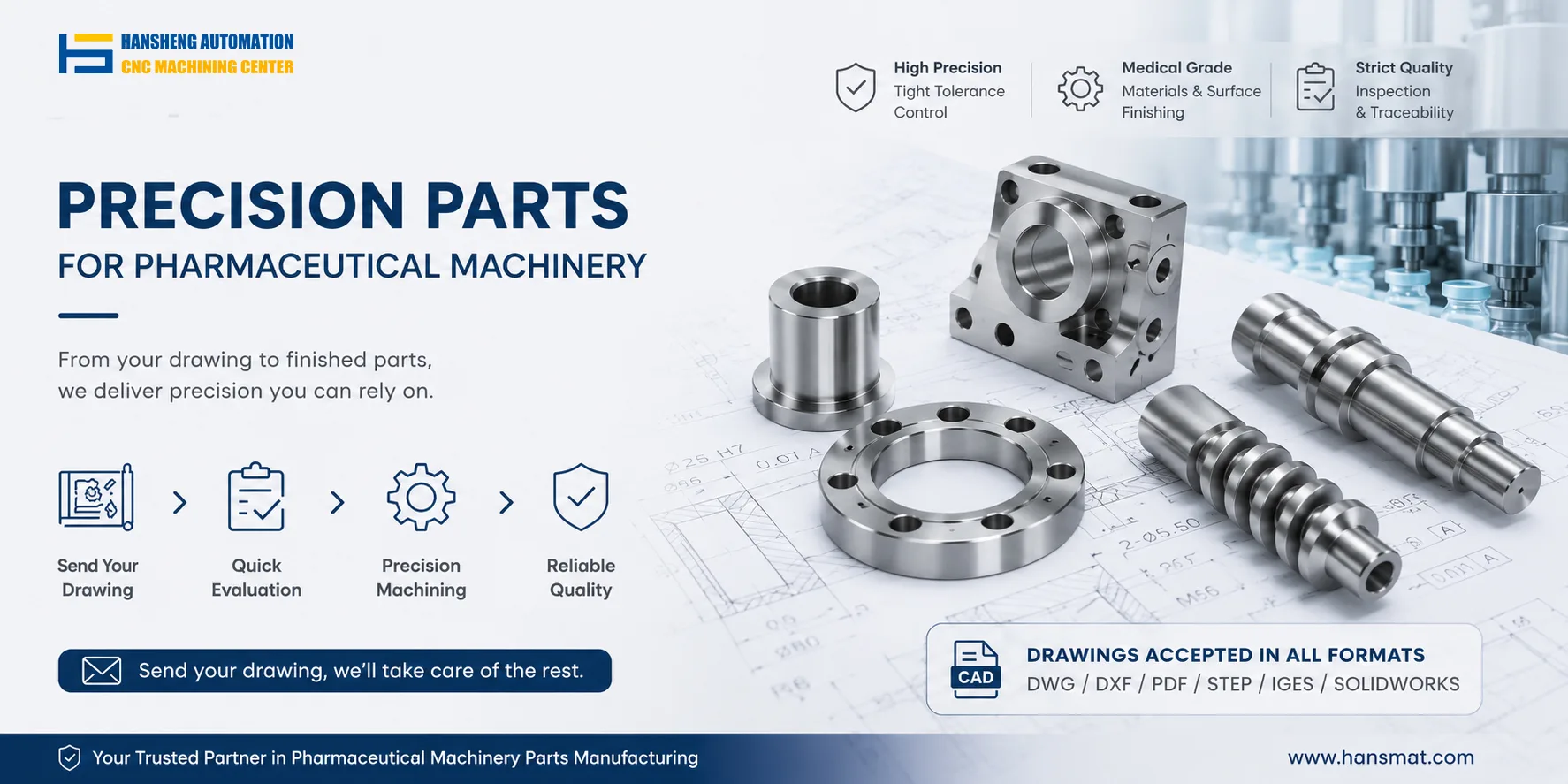
For machines with customized bottle sizes or non-standard conveyor layouts, standard components may not always provide the required fit. We can manufacture custom shafts, rollers, mounting plates, brackets, sleeves, and other precision components according to customer drawings, allowing the mechanical interface to match the actual packaging machine rather than forcing the machine to adapt to an unsuitable standard part.
4. Complete the Electrical Connections
After the mechanical alignment is confirmed, connect the bottle divider's power and control cables according to the electrical schematic of the packaging machine.
The control wiring normally connects to the corresponding PLC interface or control circuit, while the power cable is connected to the specified power supply. Check each terminal carefully and make sure there are no loose connections, incorrect wiring points, or damaged cables.
Before restoring normal operation, verify that the bottle divider can correctly receive control commands and return the required feedback signals. Electrical work involving hazardous voltage should only be performed by qualified personnel.
5. Carry Out a Low-Speed Trial Run
After completing the mechanical and electrical installation, start the packaging machine at low speed and observe the dividing mechanism.
Check whether the dividing wheel rotates smoothly, whether the bottles maintain the required spacing, and whether the transition between the conveyor and dividing station is stable. Pay particular attention to bottle accumulation, contact between bottles, and abnormal vibration.
Based on the trial results, fine-tune parameters such as dividing-wheel position, wheel spacing, and rotational speed. Different bottle diameters, conveyor speeds, and production requirements may require different settings.
Once the bottle divider operates consistently at low speed, gradually increase the machine speed and verify that the dividing accuracy remains stable under normal production conditions.
Installation Precautions
Keep the machine isolated from the power supply during mechanical installation and adjustment. Operators should also wear appropriate protective equipment when handling glass bottles and working around machine edges or moving components.
Before production begins, inspect the mounting bolts, mechanical clearances, electrical connections, and emergency-stop function. The bottle divider should not be put into continuous operation until all components have been confirmed to operate normally.
The mechanical components used for bottle separation also influence positioning accuracy and operating stability. Hansheng Automation can machine non-standard packaging-machine components from customer drawings, including precision shafts, rollers, gears, brackets, mounting parts, and other custom mechanical components. We can manufacture these parts according to specified dimensions, tolerances, materials, surface finishes, and assembly requirements.