When a vacuum packaging machine fails to discharge into the bag, the cause is usually one of three things: a blocked hopper or discharge channel, a photoelectric sensor that is not signaling, or a parameter set incorrectly. Work through them in the order below.
Material blockage
Open the hopper and check for caking, tangled fibers, or large foreign objects stuck at the discharge opening.
Cut power before clearing. Use a dedicated tool to clear the blockage. Do not use your hands.
For sticky materials such as minced meat or sauces, clean the hopper inner wall every 2 hours.
Photoelectric detection
For a through-beam photoelectric sensor, first check alignment. Wipe dust off the lens with a lint-free alcohol wipe.
Test the sensor response: the indicator should turn red when the beam is blocked and green when it is clear.
Sensitivity is adjusted with the adjustment knob. Turn clockwise to increase sensitivity.
Parameter settings
Discharge delay is typically 0.1 to 0.3 seconds. If it is too short, the seal closes before the product drops.
Vacuum level for standard food products is -0.08 to -0.1 MPa. If vacuum is too high, the bag gets pulled against the discharge opening.
Mechanical adjustment
Set vibration feeder amplitude to 1.5 to 2 mm using the controller percentage.
The discharge gate cylinder stroke is normally 20 mm. If the stroke is short, the gate does not open far enough.
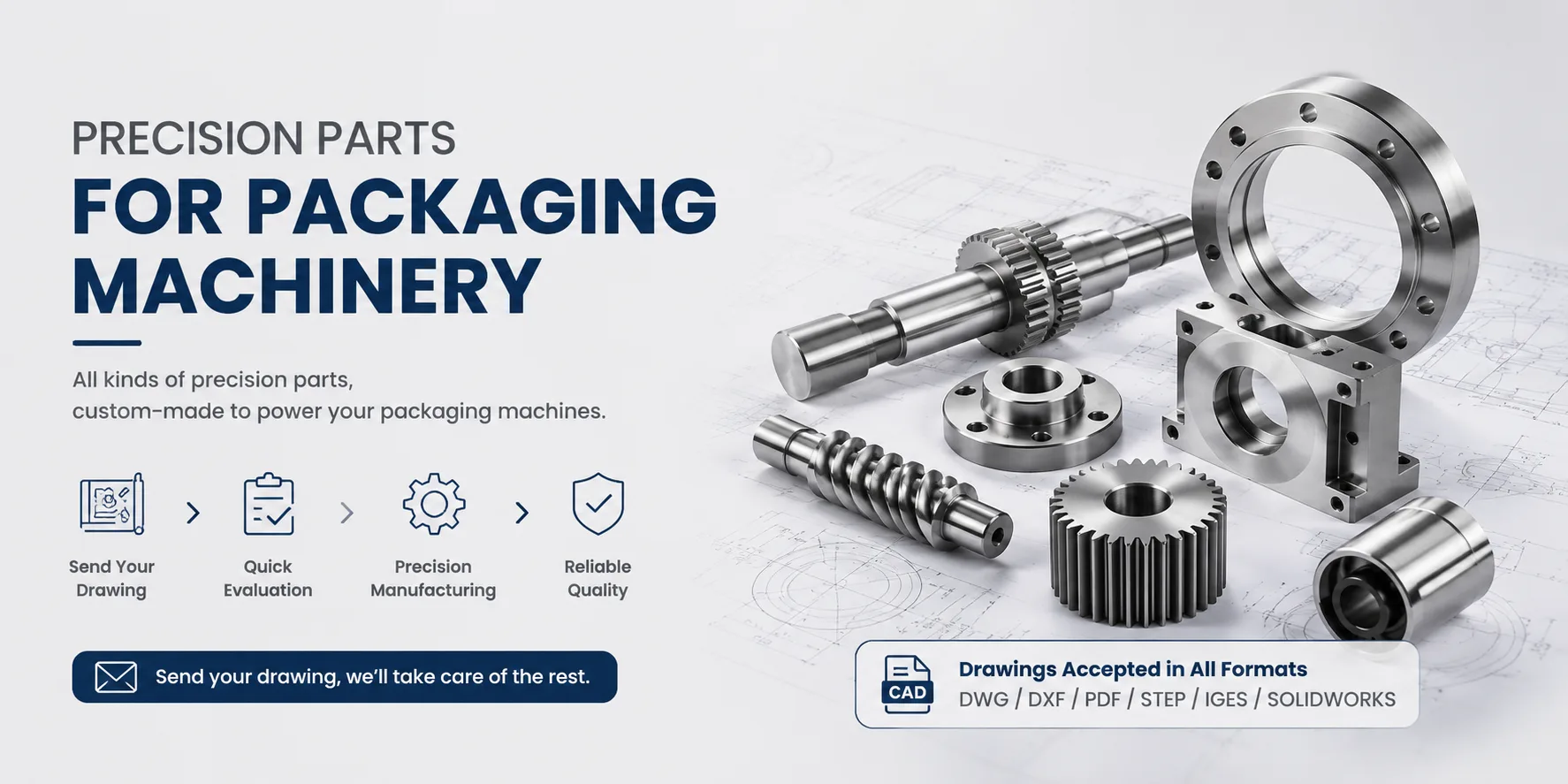
On screw feeders, check the clearance between the screw and the pipe wall. It should stay at 1.5 to 2 mm. We can machine screw feeder screws, discharge gates, hopper liners, and other parts to customer drawings, for single pieces or small batches.
Emergency response
Press the emergency stop button immediately.
Switch to manual mode and test the discharge mechanism on its own.
Blow compressed air backward through the discharge pipe. Keep pressure at or below 0.4 MPa.
Maintenance
Do a full maintenance check once a week: clean the hopper, calibrate the photoelectric sensor, and check air circuit sealing. If the problem persists, contact the equipment manufacturer to check the timing logic in the PLC control system.
Beyond these parts, our precision machining capability also covers non-standard components for pharmaceutical packaging machinery, daily chemical filling equipment, and tobacco packaging machinery, as well as precision structural parts for yachts and RC race cars. Hansheng Automation machines single pieces or small batches to customer drawings, with material, tolerance, and surface finish specified by the drawing.