During the operation of a wet mixer granulator, introducing clean compressed air is typically necessary for pneumatic valve control, main shaft air-purged sealing, or material fluidization assistance. To ensure stable equipment operation, operators must strictly follow core steps when connecting gas pipelines: confirming parameters, configuring high-standard components, and conducting rigorous testing.
The first step is to confirm the gas source parameters and interface specifications. Operators need to verify the required compressed air working pressure (usually set between 0.5 and 0.7 MPa) and rated flow rate based on the equipment nameplate or technical manual. Simultaneously, they must identify the pre-existing gas input port size and thread specifications (such as a standard G1/2-inch internal thread) on the equipment end to provide accurate data for subsequent pipeline routing.
The second step is to prepare pressure-resistant and highly sealed connection components. For the main gas line, facilities typically need to configure high-quality polyurethane (PU) or nylon tubing with a pressure rating exceeding 1 MPa. This is supplemented by quick-connect fittings, high-strength threaded joints, and a filter regulator designed for air purification and pressure stabilization.
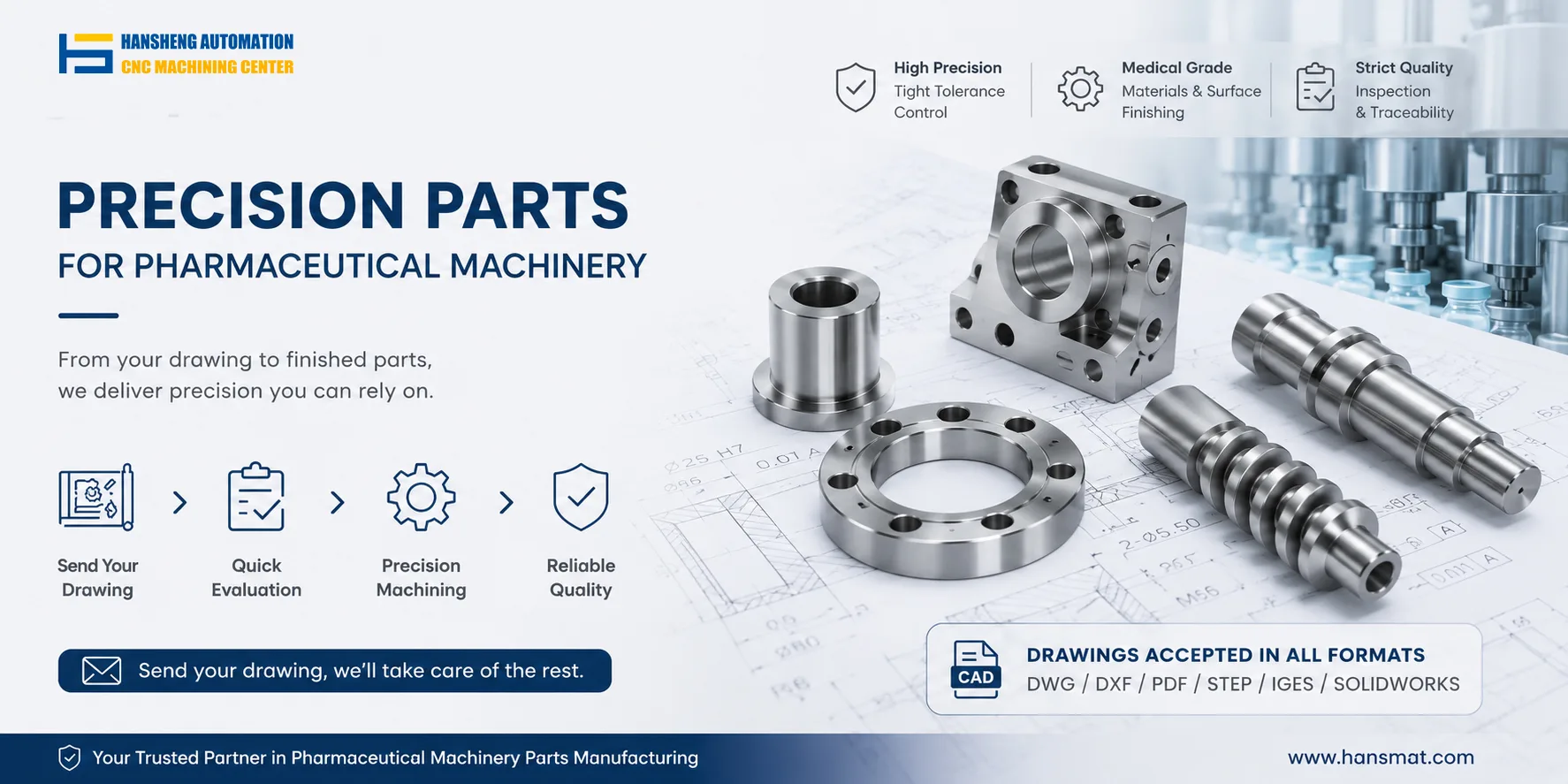
For the complex gas distribution manifolds and high-pressure interface components inside the granulation system, Hansheng Automation supports the exact manufacturing of various non-standard components according to customer prints. We can perform single-piece or low-volume precision machining of gas distribution manifolds, high-precision flange interfaces, and pneumatic sealing actuators based on customer design drawings. By selecting corrosion-resistant materials like 316L stainless steel and relying on advanced CNC machining technology to strictly control the fit tolerances of threads and mating surfaces, we effectively eliminate pressure decay caused by micro-pores or machining defects. Leveraging our robust machining capabilities, we are dedicated to ensuring your compressed air system maintains ultimate air-tightness and response speed, even under high-frequency pneumatic pulses during frequent start-stop cycles.
Next is the safe physical connection phase. Operators must perform all pipeline connections under completely safe conditions, with the main gas valve closed and the equipment powered off. The operator securely connects the prepared tubing and matching fittings to the granulator's gas input port. To further enhance the physical sealing grade of the threaded connections, technicians can apply an appropriate amount of PTFE (Teflon) thread seal tape. Subsequently, they properly connect the end of the gas line to the workshop's main compressed air network outlet.
The final step involves rigorous leak detection and dynamic testing. After completing the connections, operators should slowly open the main gas valve. While the equipment remains unpowered in a static state, inspection personnel must apply soapy water to all joints and valves to conduct a leak test. Only after confirming the complete absence of micro-leak bubbles across the entire line can they turn on the granulator's power. Following this, operators test the running status of various pneumatic logics under a no-load condition, closely monitoring the pressure gauge readings to ensure the gas supply remains continuously stable and fully complies with the established process parameter settings.