Wave soldering and reflow soldering are two common electronic assembly technologies. Selecting the right equipment requires evaluating several factors, including production efficiency, cost, applicable product types, and process requirements.
First, the production needs and product types should be clearly defined. Wave soldering is suitable for PCBs where component connections are achieved through soldering, especially high-volume, high-density boards with through-hole components. Reflow soldering is used for surface mount technology assembly and is particularly suited to small, high-density components.
Cost should be assessed by balancing the initial investment with long-term operating costs. Equipment that maintains stable performance while supporting higher efficiency and lower unit cost can help improve overall production economics.
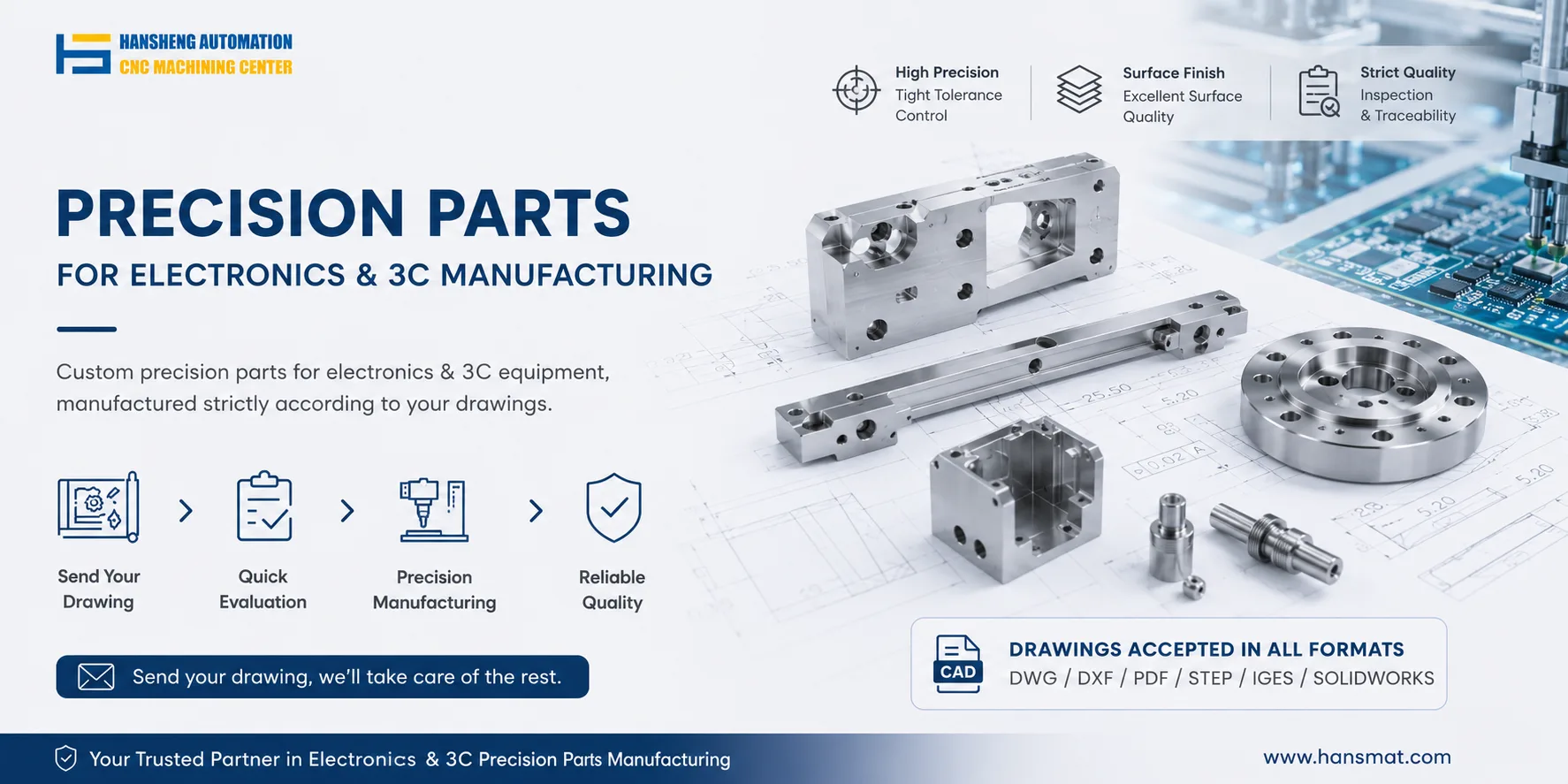
Process requirements also play an important role. Different production lines may require varying levels of precision, reliability, and speed. Equipment should be selected according to the specific soldering profile, board size, and thermal demands of the product. For non-standard guide rails, custom fixtures, or precision tooling used to support special board handling in either wave soldering or reflow soldering systems, Hansheng Automation can provide custom machining based on customer drawings.
In summary, the choice between wave soldering and reflow soldering equipment should be based on production needs, product type, budget, and process requirements. A well-matched machine helps achieve stable output and consistent soldering quality.