A vegetable washing line combines a fixed process flow with several machine groups. The flow covers receiving, sorting, grading, washing, cutting, packing, preservation, sterilization, and cold storage. Equipment selection changes with vegetable type and final product.
Process flow
Lifting: Harvested vegetables are lifted to the start of the line for sorting and grading.
Sorting: Workers or machines remove impurities, yellow leaves, rotten leaves, and other rejects.
Grading: Vegetables are graded by size, shape, and maturity. This makes later washing, cutting, and packing more precise and efficient.
Washing: Specialized washers remove soil, dirt, and pesticide residue from the surface to keep the product safe.
Cutting: Cutting equipment portions vegetables into sections, slices, strips, or cubes for cooking and eating.
Packing: Cut vegetables are packed to prevent contamination and damage during storage and transport, and to make shelf display and consumer purchase easier.
Preservation: Vacuum packing, modified atmosphere packing, and other methods extend shelf life and help retain texture and nutrition.
Sterilization: Packed vegetables are sterilized to kill microorganisms and improve food safety.
Cold storage: Sterilized vegetables go into cold storage to maintain low temperature and further extend shelf life.
Main equipment
Washing equipment
Bubble washing machine: Suits leafy vegetables. Bubble tumbling and water flushing remove soil and dirt from the surface.
Brush washing machine: Suits root and stem vegetables. Brush scrubbing removes soil and peel fragments.
Vortex washing machine: Suits cut vegetables. Vortex action makes vegetables rotate and tumble in water, which removes surface dirt and impurities.
Peeling equipment
Peeling equipment handles root and stem vegetables. Mechanical action removes the outer skin efficiently and accurately while keeping the vegetable intact.
Air-drying equipment
Air-drying equipment blows air over vegetables to remove surface moisture. This prevents water from affecting later steps and helps storage and preservation.
Cutting equipment
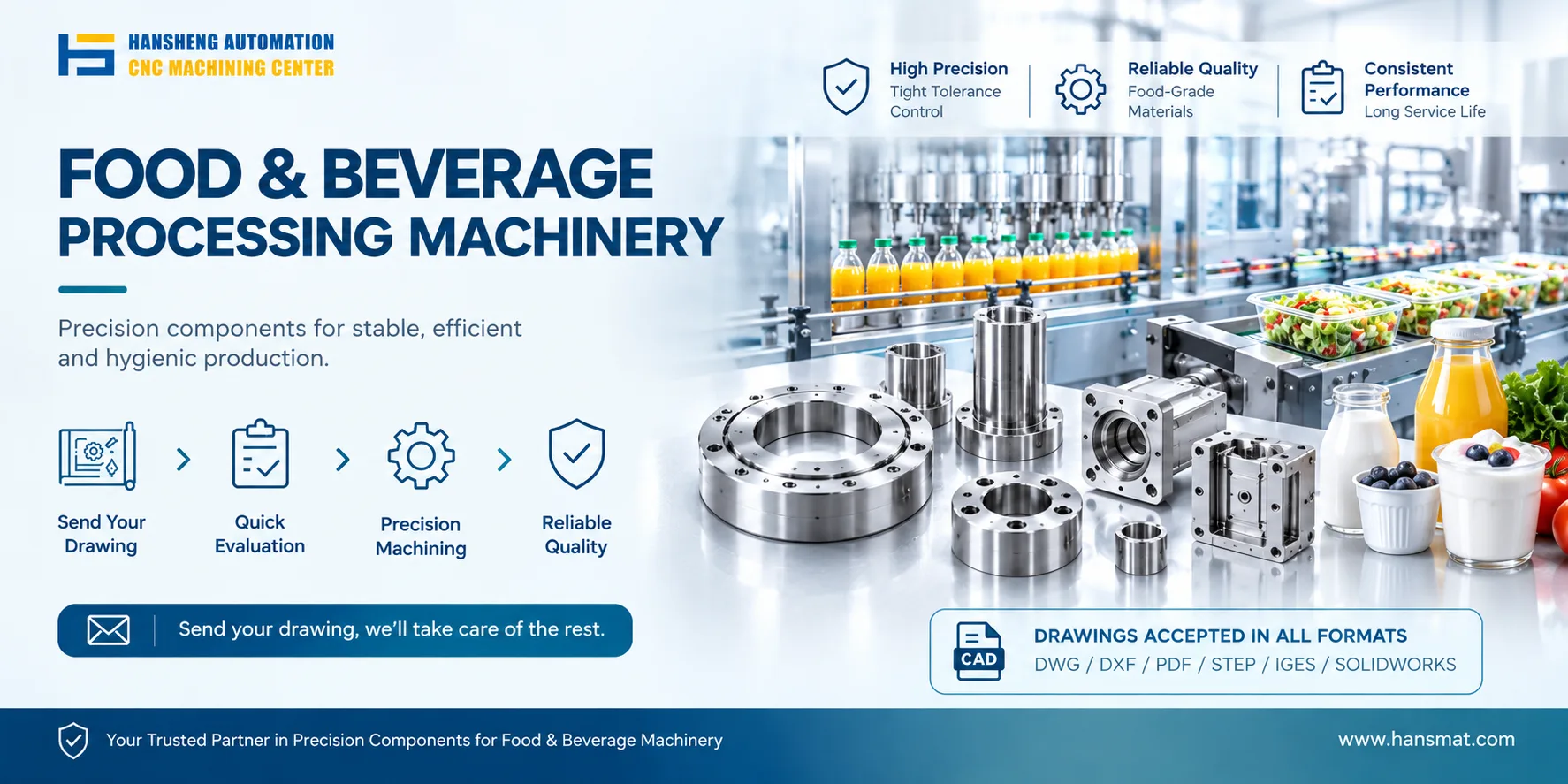
Cutting equipment portions vegetables accurately into sections, slices, strips, cubes, and other shapes to meet different cooking and eating needs. Hansheng Automation can machine custom stainless steel conveyor parts, brush roller shafts, slicing blades, and food-grade fixtures from customer drawings, in single pieces or small batches.
Packing equipment
Packing equipment packs cut vegetables to prevent contamination and damage during storage and transport. Common methods include vacuum packing and modified atmosphere packing, which extend shelf life and market display time.
Summary
A vegetable washing line depends on a clear process and the right equipment. Good flow design and suitable machines improve hygiene, processing efficiency, and product quality.
Beyond vegetable processing equipment, our precision component customization serves more than one industry. We machine medical device parts, yacht precision components, RC car precision components, tobacco packaging machinery parts, filling machinery parts, printing machinery parts, and food machinery parts. Hansheng Automation works from customer drawings and delivers one-off or batch parts to the required material, tolerance, and surface finish. Our scope is precision components, not complete machines.