A motorboat converts the energy produced by its engine into thrust through a propulsion system. The driver controls speed, heading, and running attitude through the throttle, steering mechanism, and any available trim system. The exact operating principle depends on the propulsion configuration. Common arrangements include propeller propulsion and waterjet propulsion.
How the Engine Generates Power
The engine is the primary power source of a motorboat. Many recreational motorboats use gasoline engines. Depending on the hull and propulsion design, the engine may be mounted outside the hull or installed inside it.
During operation, fuel combustion inside the cylinders drives the pistons in a reciprocating motion. The connecting rods transfer this motion to the crankshaft, which converts it into rotary mechanical power. Engine output power and speed affect the thrust available from the propulsion system and therefore influence acceleration and boat speed.
How Power Reaches the Propulsion System
The power transmission arrangement depends on the engine and propulsion configuration. Not all motorboats use the same components.
On an outboard-powered boat, the engine and lower gearcase form an integrated unit. Internal shafts and gears transmit power to the propeller. The gearcase typically also provides forward, neutral, and reverse operation.
On an inboard-powered boat, a marine gearbox and propeller shaft commonly transmit power from the engine to the propeller. The marine gearbox engages or disengages power transmission and provides the required forward and reverse functions, depending on its design. Its role should not be treated as identical to that of an automotive transmission.
On a personal watercraft with waterjet propulsion, the engine typically drives a pump impeller through a drive shaft. The impeller accelerates the water, which exits through a nozzle to generate thrust. This arrangement differs from propeller propulsion and should be described separately.
How a Propeller or Waterjet Generates Thrust
Propeller propulsion
A propeller consists of a hub and blades. Engine power rotates the propeller, and the blades push water backward. The resulting change in water momentum generates a reaction force that moves the boat forward.
Propeller diameter, blade geometry, pitch, and operating speed all affect propulsion performance. Actual results also depend on hull weight, bottom design, and water conditions.
Waterjet propulsion
A waterjet system draws water through an intake near the bottom of the hull. An impeller inside the pump accelerates the water, which is then discharged through a nozzle to generate thrust. Many personal watercraft use this arrangement instead of a conventional exposed propeller.
Steering in a waterjet system is generally achieved by changing the direction of the nozzle. Some models also use a reverse gate to assist with deceleration and reverse maneuvering. The available functions depend on the specific design.
How the Controls Regulate Speed and Direction
The throttle adjusts engine output. Changes in engine output affect propeller speed or the flow and discharge velocity of a waterjet system, changing the available thrust and boat speed.
The steering method depends on the propulsion layout. An outboard engine or sterndrive can change the direction of thrust by pivoting the propulsion unit. A boat with an inboard engine and a fixed propeller commonly uses a rudder to control heading. On a waterjet-powered personal watercraft, the steering mechanism changes the direction of the jet nozzle.
On some waterjet-powered craft, steering response depends closely on available thrust. Releasing the throttle does not bring the craft to an immediate stop. The distance required to slow down depends on the initial speed, hull characteristics, and water conditions.
How the Trim System Adjusts Running Attitude
Some motorboats are equipped with a trim system, but its design and function vary by vessel type.
On an outboard-powered boat, power trim changes the engine angle relative to the hull, adjusting the direction of thrust and the boat's running attitude. Some boats also use trim tabs, which are adjustable plates mounted near the transom. By changing local water flow and hydrodynamic forces, the tabs help control the boat's attitude.
On a waterjet-powered personal watercraft, the trim system typically changes the vertical angle of the jet nozzle. This alters the direction of thrust and influences the tendency of the bow to rise or lower.
An appropriate trim setting can improve acceleration, running attitude, and handling stability. The best setting depends on hull design, load, speed, and water conditions. A particular trim angle does not automatically produce higher speed in every operating situation.
How the Complete System Works
The operating sequence is straightforward: the engine generates mechanical power, the transmission system delivers that power to a propeller or waterjet, and the propulsion unit produces thrust by moving water. The driver controls power output and heading through the throttle and steering controls, and adjusts running attitude where the vessel has a trim system.
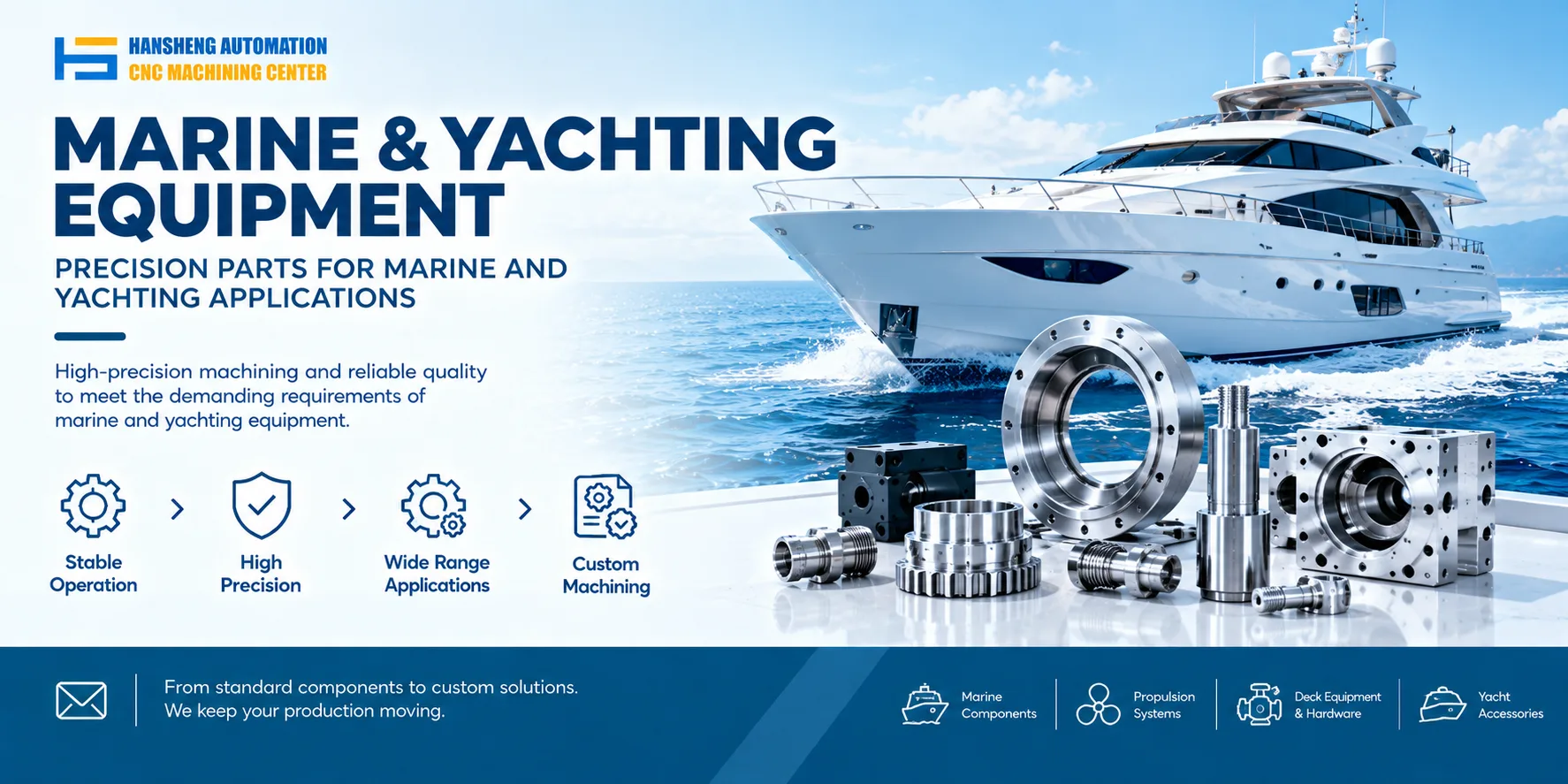
For motorboats and marine equipment, propulsion efficiency and operating reliability depend not only on the engine but also on the design and manufacturing quality of components such as shafts, gears, housings, supports, and mounting interfaces.
Hansheng Automation provides drawing-based precision machining for custom components. We manufacture parts for yacht equipment, radio-controlled racing vehicles, tobacco machinery, and filling and packaging equipment according to customer drawings, dimensional tolerances, and assembly requirements.