An automatic carton sealer is part of an automatic case packing line. It seals cases after products are packed, completing the last packaging step.
Main parts include the height adjustment mechanism, flattening mechanism, case transfer mechanism, width adjustment mechanism, frame, and hot melt adhesive system.
Working principle: After packing, the case is fed into the sealer by a conveyor chain, belt, or roller and handed to the case transfer mechanism. Side belts clamp the two sides of the carton and move it forward. The front short flap bends automatically through the flap press frame. When the rear short flap enters the sealer rollers, a detection signal, a photoelectric signal, tells the flap tucking cylinder to act, and the flap tucking frame bends it. At the same time, another signal tells the hot melt glue unit to spray adhesive automatically. The carton continues forward. The left and right long flaps bend toward the center automatically along guide rods. The belts of the press-down mechanism press the left and right long flaps at the same time, bonding case, flaps, and adhesive together. This completes the sealing and shaping action, the last packaging step, automatic carton sealing.
Structure of an automatic carton sealer
A carton sealer generally has 16 parts:
- Frame
- Worktable adjustable legs
- Conveyor drive belt
- Power switch
- Emergency stop switch
- Guide rods
- Guide rod locking handwheels
- Lower cartridge
- Guide wheels
- Guide pressure plate
- Guide wheel locking handwheel
- Upper cartridge
- Sealing tape
- Drive
- Lifting handle
- Auxiliary worktable
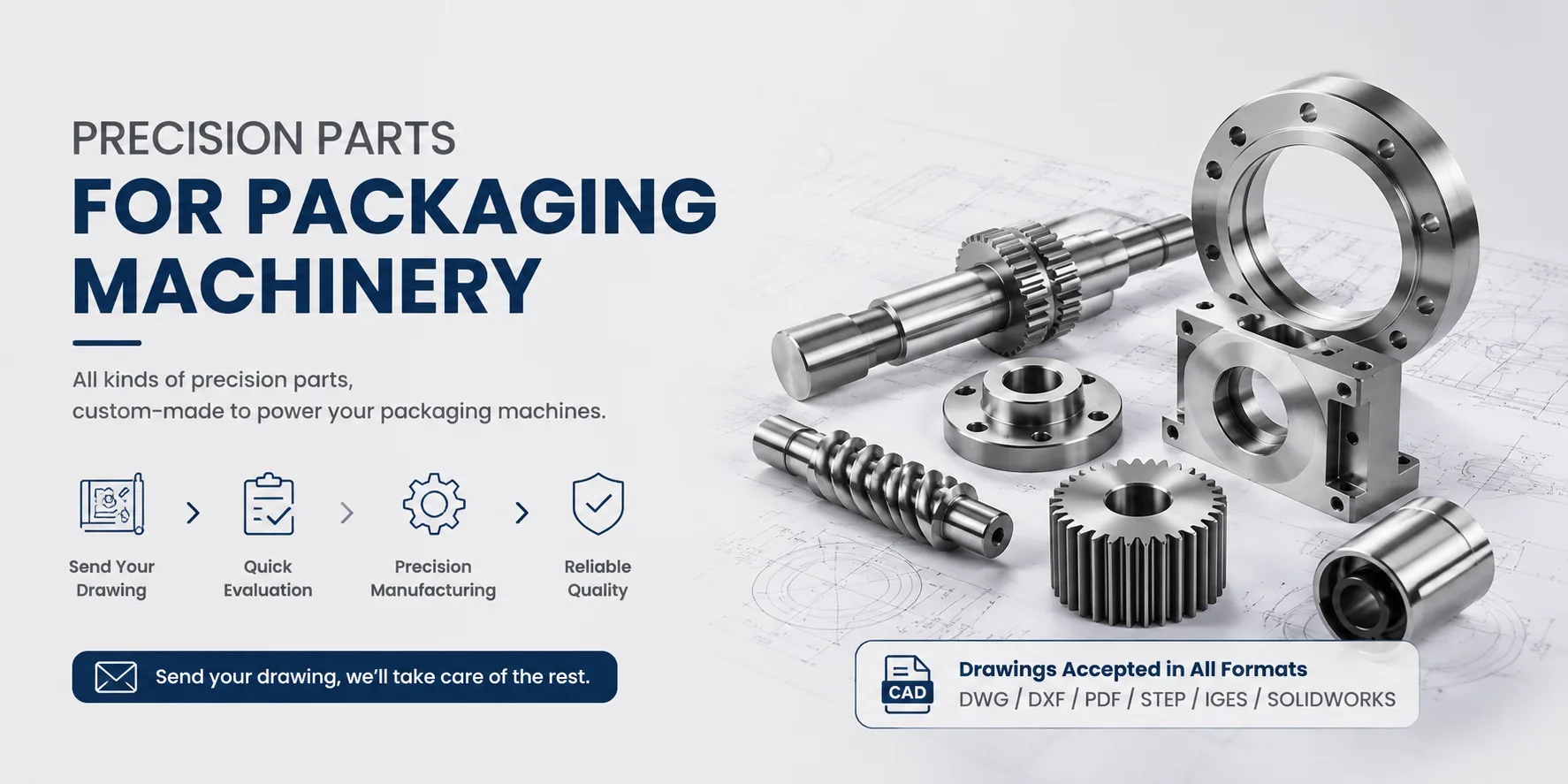
If guide rods, guide wheel mounts, guide pressure plates, cartridge mounting parts, or similar parts need machining to drawing, we can handle single-piece or small-batch custom work from customer drawings. Hansheng Automation supports materials such as stainless steel and aluminum alloy, with tolerances and surface treatment controlled by the drawing. We focus on precision machined parts, not complete machines.
Beyond carton sealer parts, our drawing-based custom machining also covers case packers, filling machinery, tobacco packaging machinery, medical devices, printing equipment, food processing lines, yacht hardware, and RC car structural parts. We machine single pieces and small batches to drawing for equipment builders and production lines.