Ventilators require regular maintenance. There are two categories: home non-invasive ventilators and medical invasive ventilators. Maintenance intervals and items differ.
Home sleep ventilators (for snoring and COPD non-invasive machines, daily personal use)
1.1 Daily maintenance
Humidifier water chamber: pour out remaining tap water or mineral water, wipe dry, and never leave water overnight. This prevents mold and bacterial growth. Use only purified water or distilled water.
Mask and headgear: remove the silicone cushion, rinse with clean water, and dry in the shade. Avoid direct sunlight, which ages the material. Clean daily if the patient sweats heavily.
1.2 Weekly maintenance
Tubing: rinse the corrugated tubing gently with warm water, hang it upside down to dry in the shade, and make sure no water remains on the inner wall.
Filter cotton (air inlet filter):
White ultra-fine filter: replace directly when dirty, 1 to 3 months per piece.
Black coarse filter: rinse with clean water, dry, and reuse. Remove dust weekly.
1.3 Monthly and quarterly maintenance
Check headgear tension and aging, and check the mask silicone for cracks. Replace damaged parts. Leaks affect treatment effectiveness.
Wipe the machine housing with a dry cloth. Do not let water enter.
Consumable replacement intervals:
Ultra-fine filter: 1 to 3 months. Mask: 6 to 12 months. Tubing: 6 to 12 months. Humidifier chamber seal: replace when aged.
Medical invasive ventilators (ICU and hospital intubation models, professional maintenance)
Every shift: clean the expiratory filter and condensed water, and check tubing for water accumulation.
Weekly deep disinfection: remove and disinfect the breathing circuit, expiratory valve, and sensors.
Annual professional maintenance: manufacturer engineers calibrate pressure and flow sensors, service the motor, safety valve, and oxygen concentration module, and replace internal seals and aging valve plates.
Medical ventilators are Class II medical devices. Annual inspection and maintenance are mandatory. Without maintenance, pressure accuracy and alarm functions can fail and endanger patients.
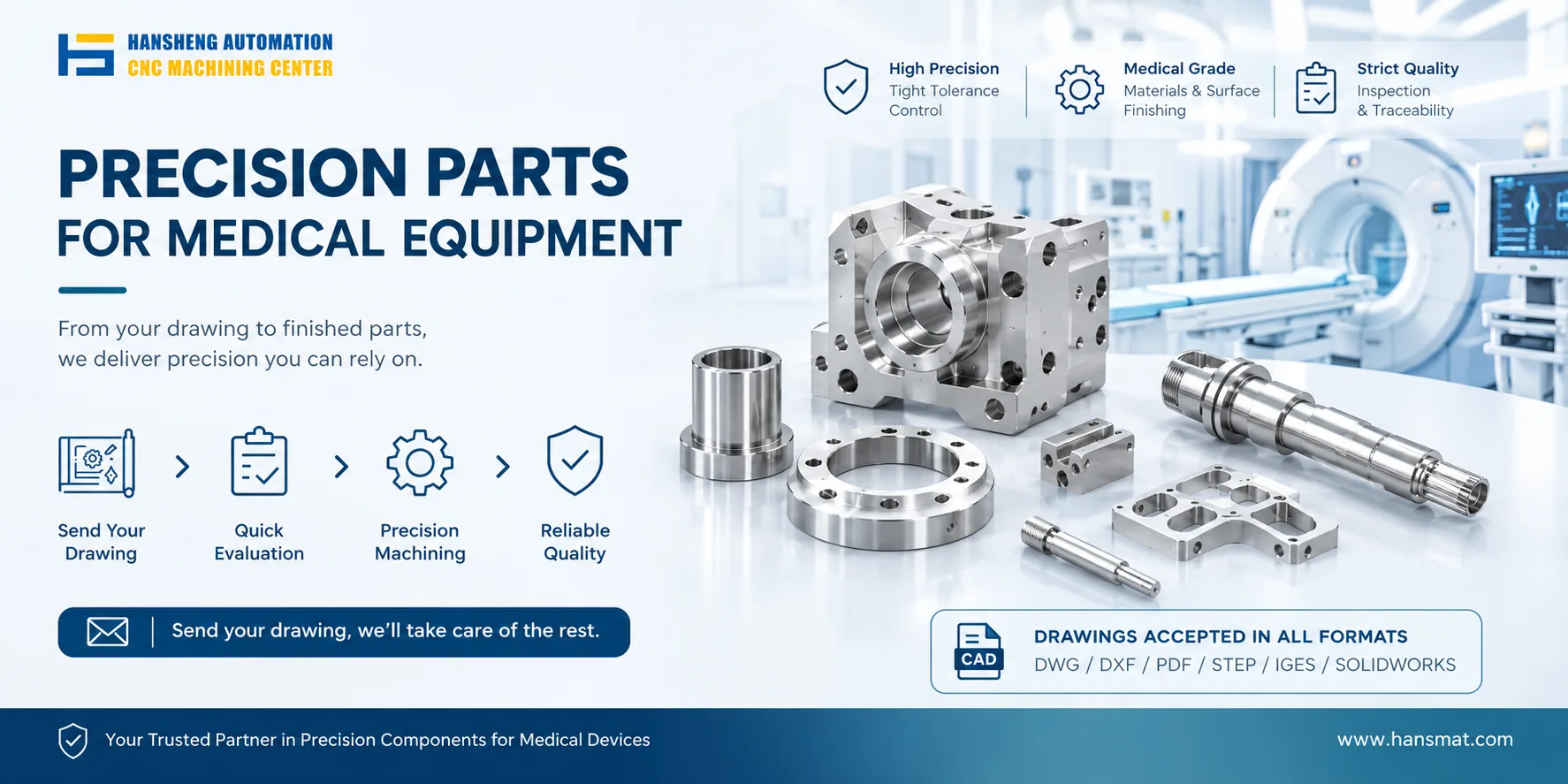
For ventilator manufacturers and service providers, Hansheng Automation can machine custom sealing seats, valve plates, and mounting components to customer drawings in single units or small batches.
Risks of not maintaining the ventilator
Airway problems: mold and bacteria in tubing and the water chamber are inhaled with airflow, causing rhinitis, pneumonia, and repeated coughing.
Machine failure: a clogged filter increases fan load, noise, and insufficient pressure, and can lead to premature motor burnout.
Treatment failure: an aging mask leaks, so snoring and hypoxia cannot improve.
Key prohibitions
Do not scald masks and tubing with boiling water, do not expose them to direct sunlight, and do not soak them in disinfectant for long periods. These actions accelerate rubber aging.
Do not add tap water to the humidifier. It causes scale and bacteria.
Beyond ventilator parts, Hansheng Automation supports custom machining for yacht hardware, RC car components, tobacco packaging machinery, filling equipment, printing machinery, and food processing machinery, among other applications. We work from customer drawings and deliver single units or small batches. The service stays within precision parts manufacturing and does not include complete equipment sales.