Devolatilization removes low molecular weight volatile compounds from silicone rubber after internal mixing. The process generally combines heating and vacuum treatment to promote the release of volatile substances while keeping the material within its acceptable processing temperature range.
Common equipment includes vacuum ovens, twin-screw devolatilization extruders, and thin-film evaporators. The choice depends on production volume, material properties, and whether batch or continuous processing is required.
1. Main steps in silicone rubber devolatilization
1.1 Preheating
After internal mixing, the silicone rubber compound is transferred to the selected equipment for preheating. Raising the material temperature helps volatile components separate from the compound.
The temperature must remain within the limits suitable for the silicone rubber formulation. Excessive heating may affect material properties, so the heating conditions should be selected according to the compound and equipment requirements.
1.2 Vacuum devolatilization
A vacuum pump reduces the pressure inside the processing chamber, allowing volatile substances to escape more readily from the silicone rubber.
Staged heating may be used to balance removal efficiency with material stability. The vacuum level, temperature, and treatment time should be matched to the compound's characteristics and the required residual volatile content.
1.3 Condensation and recovery
The extracted vapors can pass through a condenser, where they cool and return to liquid form for collection.
The condensation temperature should be selected according to the properties of the volatile substances being removed. Collecting these substances can reduce material loss and limit their release into the surrounding environment.
1.4 Cooling and quality inspection
After devolatilization, cool the silicone rubber under suitable conditions and test its relevant physical properties.
Hardness and tensile strength are among the properties that can be checked to confirm that the treated material meets the required specifications. Additional tests may be necessary depending on the intended application and the material's quality requirements.
2. Comparison of silicone rubber devolatilization equipment
2.1 Vacuum oven
A vacuum oven is suitable for laboratory work, small batches, and applications that do not require continuous processing. Its structure is relatively simple, and operating procedures are generally straightforward.
However, batch processing and manual loading and unloading can limit throughput. The heating cycle and vacuum conditions must also be controlled to achieve consistent results between batches.
2.2 Twin-screw devolatilization extruder
A twin-screw devolatilization extruder is designed for continuous industrial processing. It combines screw conveying and material mixing with one or more vacuum zones to remove volatile compounds as the material moves through the machine.
The screw configuration and operating conditions can be adjusted to control material transport and residence time. This makes the equipment suitable for production processes that require continuous operation and consistent devolatilization.
Actual performance depends on the screw design, vacuum system, material feed rate, and properties of the silicone rubber compound.
2.3 Thin-film evaporator
A thin-film evaporator is suitable for materials that require careful temperature control during volatile removal. The material spreads into a thin layer over a heated surface, improving heat transfer and facilitating the release of volatile components.
Vacuum operation can lower the temperature required for evaporation and shorten the treatment cycle under suitable conditions. These characteristics may help reduce the risk of thermal degradation in heat-sensitive materials.
The equipment must be selected according to the viscosity and processing behavior of the silicone rubber compound.
3. How to select the appropriate equipment
The choice of devolatilization equipment depends on the required production capacity, the compound's thermal stability, and the target residual volatile content.
|
Selection factor |
Vacuum oven |
Twin-screw devolatilization extruder |
Thin-film evaporator |
|---|---|---|---|
|
Processing mode |
Batch |
Continuous |
Depends on system configuration |
|
Typical application |
Laboratory work and small batches |
Industrial continuous production |
Materials requiring efficient heat and mass transfer |
|
Material handling |
Batch loading and unloading |
Continuous screw conveying |
Thin-film processing |
|
Main consideration |
Treatment time and batch consistency |
Screw configuration, residence time, and vacuum performance |
Material viscosity, heat sensitivity, and film formation |
Before selecting equipment, confirm the silicone rubber formulation, expected throughput, allowable processing temperature, and required removal of volatile compounds. These factors determine whether a batch process or continuous system is more suitable.
4. Custom machining for silicone rubber processing equipment
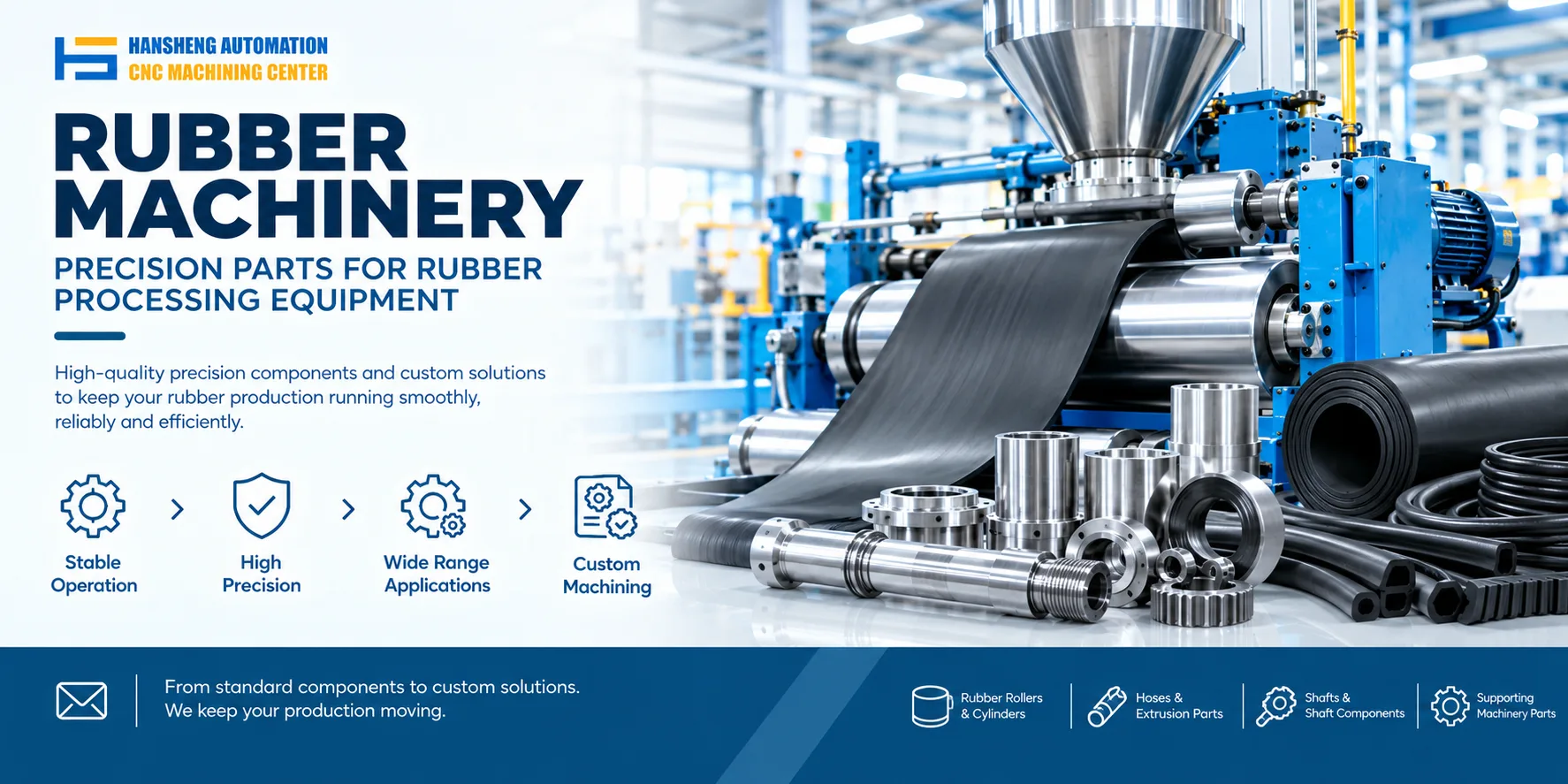
Devolatilization equipment may require precision shafts, sleeves, housings, and other metal components manufactured to specific dimensions and material requirements. Hansheng Automation can assess custom machining based on customer drawings, technical specifications, and dimensional tolerances.
Our precision machining services also cover non-standard metal components for packaging machinery, filling equipment, and tobacco machinery. We can assess custom parts for yacht equipment and RC racing cars according to the supplied drawings and machining requirements.