Tape carton sealing machines can be classified into the following types according to different criteria:
1. By Automation Level
Semi-Automatic Tape Carton Sealing Machine
This type requires an operator to manually place the carton in the designated position. The machine then automatically completes tape application, cutting, and sealing actions. It features simple operation and relatively low cost, making it suitable for small to medium-scale production or applications where sealing speed is not demanding, such as small packaging workshops and e-commerce dispatch points.
Fully Automatic Tape Carton Sealing Machine
This machine integrates conveying, positioning, sealing, and stacking functions. It can automatically complete the entire process from carton conveying and tape application to finished product output. Its advantages include high efficiency, stability, and minimal manual intervention, making it suitable for large-scale continuous production in industries such as food, beverage, and daily chemicals.
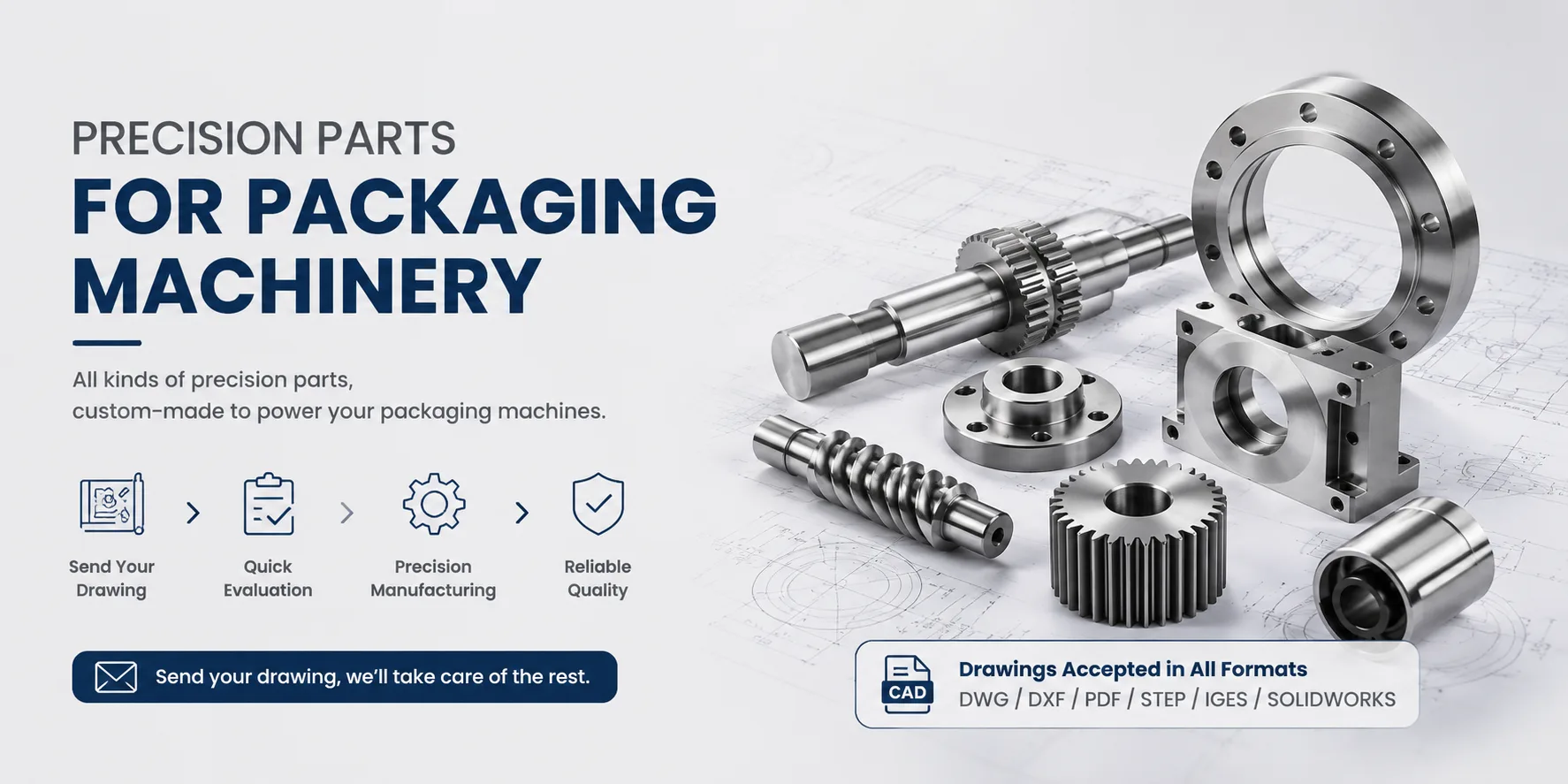
In fully automatic models, high-wear components such as tape cutting blades, pressing rollers, and guide wheels operate continuously and require reliable dimensional accuracy. Hansheng Automation provides custom machining of these parts according to customer drawings or samples.
2. By Sealing Position
Top Carton Sealing Machine
This machine uses a top pressing device to apply tape horizontally on the top surface of the carton. It is suitable for standard-sized cartons. Its main advantage is strong versatility, as it can adapt to cartons of different heights. It is the most common sealing method in logistics and warehousing.
Side Carton Sealing Machine
This type uses a side pressing device to apply tape vertically on the side of the carton. It is suitable for low-profile or flat cartons, such as those used for electrical appliances and component packaging. The advantage is space saving and avoidance of top pressure on the contents.
Bottom Carton Sealing Machine
This machine applies tape to the bottom surface of the carton through a bottom pressing device. It is often used together with a top sealing machine to form an I-shaped sealing pattern. It is suitable for heavy or large cartons, such as those used for furniture and industrial equipment, as it strengthens the seal and prevents bottom breakage during transport.
3. By Machine Structure
Vertical Tape Carton Sealing Machine
The main body is vertically designed, occupying less floor space. It is suitable for places with limited space, such as small warehouses and store backrooms. The structure is compact, but the carton size it can handle is limited. It is usually used for lightweight, small to medium-sized cartons.
Horizontal Tape Carton Sealing Machine
The main body is horizontally designed and occupies more floor space, but it can handle larger or heavier cartons, such as those for home appliances and building materials. Its advantages include high stability and strong sealing force, making it suitable for applications with strict sealing quality requirements.
4. By Extended Functions
Corner Sealing Machine
Based on top sealing, this machine adds tape application to the four corners of the carton, forming a cross-shaped sealing pattern. It is suitable for reinforced packaging of fragile or high-value items.
Automatic Flap Folding Carton Sealing Machine
This machine integrates carton flap folding. It automatically folds the top flaps and applies tape, reducing manual steps. It is suitable for rapid sealing of standardized cartons.
Carton Erecting and Sealing Integrated Machine
This machine combines carton forming, flap folding, and sealing in one unit, realizing full automation from flat carton to finished package. It is suitable for high-efficiency, unmanned packaging lines.
Summary
The selection of a tape carton sealing machine should be based on production scale, carton specifications, space conditions, and functional requirements. For example, small and medium enterprises may choose a semi-automatic top sealing machine; large-scale production lines are better served by fully automatic corner sealing machines; space-limited sites are suitable for vertical structures; and heavy item packaging requires horizontal or bottom sealing machines.