

Beyond the Basics: Why Process Selection is a Strategic Decision

While all three methods produce a metal shape, they alter the internal microstructure differently. A cast metal component features a crystalline structure ideal for dampening vibrations, whereas a forged part possesses a directional grain flow that maximizes impact resistance.
Choosing the wrong process impacts more than the unit price. It affects machining allowance, lead times, and scrap rates. Understanding when to use forging vs casting or welding ensures you aren't paying for "over-engineered" strength or "under-engineered" durability.
What Is Casting
Precision Casting Methods (Sand, Investment, Die Casting) Metal casting services offer the shortest path from liquid metal to complex geometry.
Sand Casting: Best for heavy iron components (up to 100+ tons) but requires larger tolerances.
Investment Casting (Lost Wax): The gold standard for cast metal components requiring tight tolerances (±0.005 in/in) and Ra 3.2 surface finishes.
Die Casting: Ideal for high-volume aluminum (e.g., A380) or zinc parts where thin walls (down to 1.5mm) are required.
Advantage: Design Freedom
Casting is the only process that cost-effectively produces internal cooling galleries, complex volutes, and undercuts. If your part requires "hollow"sections or organic shapes, a custom metal casting supplier is your primary resource.
Typical Materials and Standards
Most metal casting services manufacturers work with:
Ductile Iron: (ASTM A536) for gears and pumps.
Stainless Steel: (CF8M/316) for valve bodies.
Aluminum Alloys: (A356) for lightweight structural housings.
What Is Forging - Maximum Structural Integrity
Forging uses localized compressive forces to align the metal's grain structure with the part's geometry. This results in superior tensile strength and yield
strength compared to the random grain orientation found in castings.
Where Forging Outperforms Casting
In the casting vs forging strength debate, forging is the winner for "safety-critical" parts. Because the process eliminates internal gas porosity and voids, forged parts (like 4140 alloy steel cranks) handle 20-30% higher loads in high-stress applications.
This advantage is most pronounced under cyclic fatigue and impact loading, where forging's aligned grain flow delays crack initiation. Under static tensile loading alone, the gap narrows considerably. The comparison holds when evaluating the same alloy in the same heat-treated condition - for instance, forged 4140 steel (quenched and tempered to ~900 MPa UTS) against investment-cast 4140 under equivalent heat treatment.
If the cast part is made from a lower-specification alloy, or the forged part benefits from a more aggressive heat treatment cycle, the difference can exceed this range in either direction. For aluminum alloys, the strength differential between forged and cast is typically smaller, as high-quality
aluminum castings (e.g., A357-T6) can achieve tensile strengths approaching those of comparable wrought alloys.
What Is Welding
Unlike cast metal components, welding joins discrete sections (plates, tubes, or extrusions). This is essential for massive frames where the "envelope" is too large for a casting flask or forging die.
The primary trade-off in welding is the HAZ-the area near the weld bead where the metal's properties are altered by heat. Proper metal fabrication requires stress-relieving or Post-Weld Heat Treatment (PWHT) to prevent cracking in structural joints.
Mechanical Properties Face-Off: A Data-Driven Comparison
|
Property |
Casting (Investment) |
Forging (Closed-Die) |
Welding (Structural Steel) |
|
Tensile Strength |
Moderate (500-700 MPa) |
Highest (800-1200+ MPa) |
High (Base metal dependent) |
|
Typical Tolerance |
±0.1mm to ±0.5mm |
±0.5mm to ±2.0mm |
±2.0mm to ±5.0mm |
|
Surface Finish |
Ra 1.6 - 3.2 μm |
Ra 6.3 - 12.5 μm |
Ra 12.5 - 25 μm |
|
Internal Defects |
Possible Micro-porosity |
Near-Zero Porosity |
Possible Slag/Lack of Fusion |
Cost Breakdown: Tooling vs. Unit Price
The Tooling Hurdle
Casting: High upfront cost for patterns or dies (5k–50k+).
Forging: Highest upfront cost for hardened steel dies.
Welding: Minimal upfront cost; primarily labor and fixture-driven.
Production Volume Strategy
For casting parts wholesale, the "break-even" point usually starts at 100–500 units. For low-volume prototypes (1–10 units), welding or CNC machining from billet is almost always more economical.
Real-World Scenarios
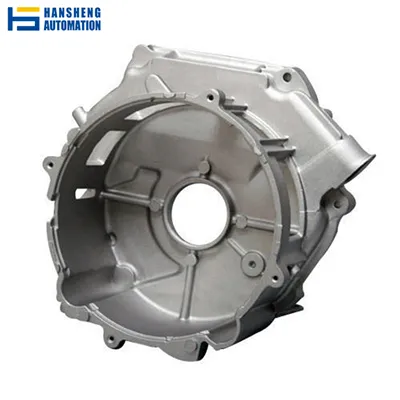
EV Motor Housing (Aluminum)
Choice Die Casting. Thin walls, complex heat-dissipation fins, and high-volume (100k+ units) requirements.
Off-Road Truck Knuckle
Choice Forging. Why? High impact loads and fatigue resistance are mandatory for passenger safety.
15-Foot Industrial Agitator Frame
Choice Welding. Too large for standard cast metal components factory equipment; allows for modular assembly.
Material Compatibility
1
Casting Only. High carbon content makes it unweldable (it cracks) and unforgeable (it shatters).
2
Can be cast (vacuum investment) or forged for aerospace, but welding requires strict argon-shielded environments.
3
Excellent for forging; require pre-heating and specific electrodes for welding.
Surface Finish and Post-Processing
A common mistake is ignoring the castings machining phase. While investment casting yields a "near-net-shape," critical mating surfaces (like bearing seats) always require secondary CNC machining. Forged parts often require more extensive "flash" removal and surface grinding.
Industry Standards and Compliance
Verify that your metal casting services manufacturer or forging house holds the
necessary certifications:
Automotive: IATF 16949
Aerospace: AS9100D
Pressure Equipment: PED 2014/68/EU
Inspection: Ask for Level II NDT (Non-Destructive Testing) including X-ray and Magnetic Particle Inspection (MPI).
How to Choose the Right Manufacturing Partner
Critical Questions for Your Supplier
1. "Do you perform solidification simulation?" (Essential for avoiding shrinkage in castings).
2. "What is your capability for near-net-shape forging?" (To reduce material waste).
3. "Are you a vertically integrated cast metal components factory?" (In-house machining and heat treatment reduce lead times).
FAQ
Q: Is casting stronger than welding?
A: Not inherently. A weld is often stronger than a casting, but the area surrounding the weld (HAZ) can be a failure point. Forged components remain the strongest overall.
Q: Can I weld a cast part?
A: Yes, if the material is cast steel or certain grades of aluminum. However, welding cast iron is high-risk and requires
specialized nickel-based filler rods.
Q: How do I reduce the cost of my metal casting services?
A: Optimize for "draft angles" and uniform wall thickness to reduce scrap rates and molding complexity.
Q: Can I switch from casting to forging mid-program if cast parts keep failing inspection?
A: Yes, but at significant cost and time. Forging eliminates porosity and inconsistent properties, but requires new dies (costlier than casting patterns), design changes (draft angles, geometry), and requalification under your standard (e.g., IATF 16949). First ask your casting supplier for root-cause analysis – most issues come from process parameters, not casting itself. Only switch if the part truly exceeds casting's capability.
Q: My part has complex internal geometry and high fatigue requirements – does that mean I need both casting and forging?
A: Yes, and it's common. Example: a hydraulic pump housing – investment casting for internal passages, forging for the drive shaft. Don't force one process on the whole part. Design the assembly so each component uses its best process. Trade-off: more joints to seal/fasten, requiring assembly-level DFM review, not just part-level.
Q: How do lead times compare for urgent prototypes: casting, forging, welding?
A: Welding (from stock material): fastest, 1–3 weeks, no tooling.
Investment casting (3D-printed wax patterns): 3–5 weeks, no hard tooling.
Forging (closed-die): slowest, 8–14 weeks minimum (dies + heat treatment).
The "right" process is found at the intersection of geometry, volume, and stress requirements. If you need intricate detail at scale, metal casting services are your best bet. If your part is a high-stress safety component, prioritize forging. For massive, low-volume structures, welding is the industry standard.
Partnering with a custom metal casting supplier who understands these metallurgical nuances is the first step toward a successful production run.
Article reference
--Forging Industry Association, forging.org