The bag former is adjusted for two things: film deviation and former inner width. Check the seal edges for deviation, and check product position for inner width. Before adjusting, set the machine to jog mode. Make small changes and test after each one.
1. Film deviation
Run the machine and check the back seal. If the left edge is shorter than the right edge, the right side has extra film. If the right edge is shorter, the left side has extra film.
Loosen the two screws beside the former.
If the right side has extra film, tap the H-shaped stainless steel plate to the left with a wrench. If the left side has extra film, tap it to the right.
Run the machine again to check. If the result is not on target, repeat the steps. Tighten the screws when done.
2. Former inner width
Jog the machine to the cross-seal position. Let the product enter the wrapping film and stop in front of the cross-seal jaw.
Loosen the clamping screw on the product position adjusting handwheel shaft.
Turn the handwheel counterclockwise. Turn it several times and watch how far the pusher rod moves.
Place a product in and jog to check product position. Adjust until the position is right, then tighten the screw.
3. Other adjustments
Film tension: loosen the fixing screws on the tension device and turn the adjustment knob to set tension. Too tight and the film tears. Too loose and the package is not tight.
Even film load: adjust the angle and position of the film infeed roller so the force between the film tube and the bag former is even.
Adjust in small steps and test several times. A single large adjustment will affect packaging accuracy.
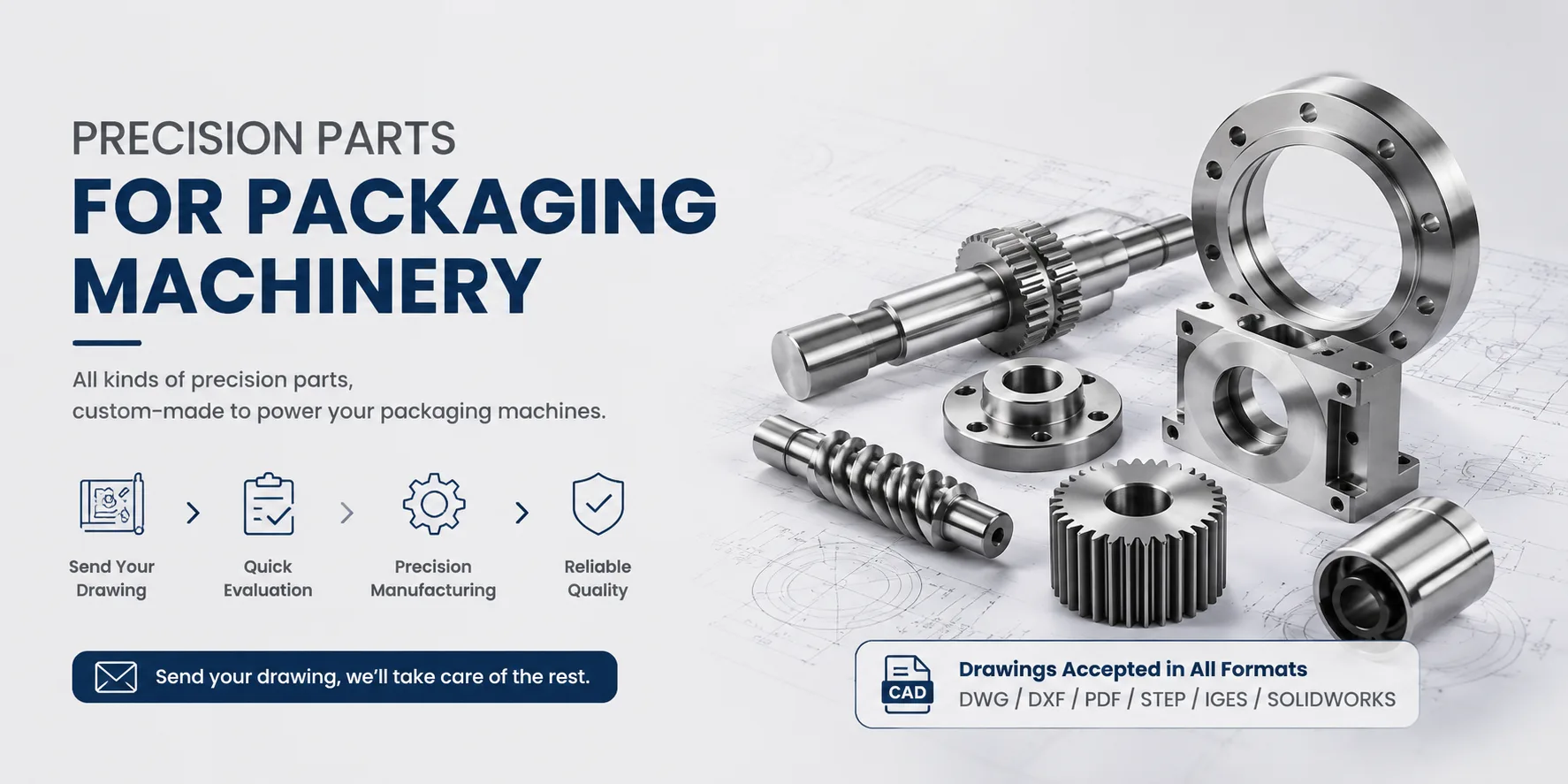
We can machine bag formers, H-shaped plates, film infeed rollers, and other parts to customer drawings, for single pieces or small batches.
Beyond these parts, our precision component machining capability also covers non-standard parts for food packaging machinery, pharmaceutical packaging machinery, and daily chemical filling equipment, as well as precision structural parts for yachts and RC race cars. Hansheng Automation machines single pieces or small batches to customer drawings, with material, tolerance, and surface finish specified by the drawing.