


Hansheng Automation (Dongguan) Co., Ltd. is one of the most experienced manufacturers and suppliers of custom steel casting in China. If you're going to wholesale bulk cost-effective custom steel casting made in China, welcome to get pricelist and quotation from our factory. Also, customized service and OEM&ODM service are available.
Hansheng Automation's foundry offers custom steel casting services. Our steel castings can be used in packaging machinery parts such as bodies, bases, brackets, connecting rods, and arms. For customers with special surface requirements, our CNC machining center (mirror finish ±0.002mm) can also provide fine surface treatment on castings.
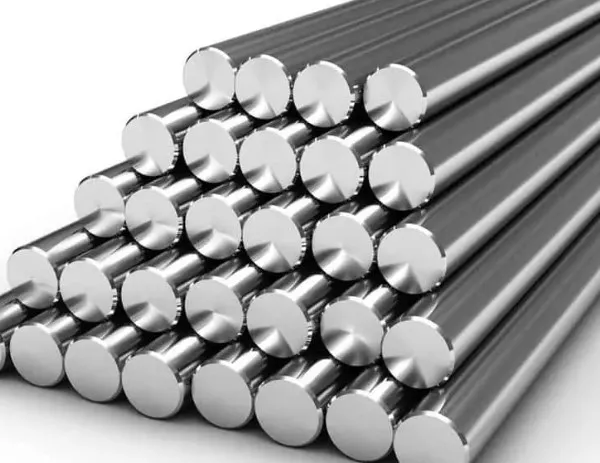
Material and Performance
Our custom steel casting is made of high-quality carbon steel and alloy steel (such as ZG270-500, ZG42CrMo, etc.), which has high strength, high toughness, excellent wear resistance and impact resistance, and is suitable for harsh working conditions such as heavy load, high temperature, and corrosion. Through precision casting processes such as sand casting and lost foam casting, the internal structure of the casting is ensured to be dense, reducing defects such as porosity and slag inclusion, and ensuring stable mechanical properties.
Support small batch trial production&fast delivery, welcome to consult customization!
Features
Steel castings vs. other materials
| Characteristic |
steel castings
|
cast iron parts
|
aluminum castings
|
| strength |
High (tensile strength of 500MPa+)
|
Medium (200-400MPa)
|
Low (100-300MPa)
|
| resilience | Excellent (impact resistance) | High brittleness | better |
| wear resistance | Excellent (can be surface quenched) | good | poor |
| High temperature resistance | Up to 600 ℃ or above | Generally (below 350 ℃) | Low (below 200 ℃) |
| cost | medium | Lower | higher |
Custom steel castings have obvious advantages in load-bearing capacity, fatigue resistance, and weldability, especially suitable for core components in mining machinery, engineering equipment, ship parts, heavy machinery, and other fields.
Main application areas
Construction Machinery
excavator track plates, crusher lining plates, hydraulic support connectors
01
Mining Equipment
ball mill gears, crusher hammers, conveyor chain wheels
02
Shipbuilding Industry
rudder castings, anchor chain wheels, propeller components
03
Energy and Electricity
wind turbine bearing seats, turbine housings, valve castings
04
Rail Transit
bogie accessories, brake system components
05

Hansheng Automation
view more

Hansheng Automation
view more

Hansheng Automation
view more

Hansheng Automation
view more
Customized process
Drawing Requirements
Provide detailed 2D/3D drawings (format: DWG, STEP, IGS, etc.), and indicate the dimensional tolerances, surface roughness, heat treatment requirements, and the required materials (such as wear-resistant steel ZG40CrMnMo, high-temperature resistant steel).ZG35Cr24Ni7SiN, etc.).
Process Selection
According to the customer's order quantity and the selected material to evaluate which casting process is more appropriate, the process can be selected sand casting, lost foam casting, lost wax casting, gravity casting, etc..
Mold Manufacturing
After determining the casting process, you can produce a suitable mold, usually using CNC machining or 3D printing to manufacture the mold.Sand casting often uses wooden molds; lost foam casting uses expanded polystyrene plastic production molds; gravity casting uses steel molds; lost wax casting uses ceramic molds.
Pouring and Shaping
Place the mold in the container and secure the mold, pour the molten metal liquid into the gating system and wait for it to cool and set.
Finishing and Quality Inspection
For molded castings, the precision tolerance often does not meet the customer's requirements, so it is also necessary to carry out CNC finishing operations, the precision of the machined surface machining to the accuracy required by the drawings.Meanwhile, quality inspection of the castings is also required after the completion of machining, and we provide reports such as UT (Ultrasonic Testing), MT (Magnetic Particle Testing), and hardness testing to ensure that the castings comply with ASTM/EN/DIN standards.

FAQ
Q: What materials do you support for custom steel castings? What core properties do these materials possess to withstand harsh working conditions?
A: We offer custom high-quality carbon and alloy steels. Specific material types include basic ZG270-500 and ZG42CrMo, as well as functional materials (wear-resistant steel ZG40CrMnMo and high-temperature-resistant steel ZG35Cr24Ni7SiN). These materials offer outstanding core properties: tensile strength of 500MPa+, enabling heavy loads; high toughness and impact resistance to prevent brittle fracture; excellent wear resistance (which can be enhanced by surface hardening); and high-temperature resistance of 600°C and above. Precision processes are used to minimize defects like porosity and slag inclusions, ensuring stable operation under harsh working conditions such as heavy loads, high temperatures, and corrosion.
Q: What information is required for custom steel castings? What are the key steps in the complete customization process?
A: Customization requires 2D/3D drawings (supporting DWG, STEP, and IGS formats) with dimensional tolerances, surface finish, heat treatment requirements, and the specified material type. The complete customization process consists of five steps: ① Submit drawings and requirements; ② Select a process based on order volume and material properties, such as sand casting, lost foam casting, lost wax casting, or gravity casting; ③ Create the corresponding mold (e.g., wooden mold for sand casting, EPS plastic mold for lost foam casting) via CNC machining or 3D printing; ④ Pour molten metal and allow it to cool and form; ⑤ CNC finish machining followed by quality inspection and final delivery of a qualified product.
Q: What quality inspection methods does your company use for custom steel castings? Do they comply with international standards?
A: We utilize multi-dimensional quality inspection methods, including UT (ultrasonic testing) to detect internal defects, MT (magnetic particle testing) to detect surface and sub-surface defects, and hardness testing to verify that the material meets hardness standards. We also provide customers with comprehensive inspection reports. All custom steel castings comply with ASTM/EN/DIN international standards.
Q: What industries are your custom steel castings primarily used for? What are some typical application components in each industry?
A: ① Construction Machinery: Excavator track shoes, crusher liners, and hydraulic support connectors; ② Mining Equipment: Ball mill gears, crusher hammers, and conveyor sprockets; ③ Shipbuilding: Rudder castings, anchor chain pulleys, and propeller components; ④ Energy and Power: Wind turbine bearing seats, turbine casings, and valve castings; ⑤ Rail Transit: Bogie accessories and brake system components.
Q: Does your company support small-batch trial production of steel castings?
A: We clearly support small-batch trial production of steel castings, while ensuring fast delivery to meet our customers' initial verification needs.
Hot Tags: custom steel casting, China custom steel casting manufacturers, suppliers, factory, casting slag, small casting, casting vent, casting porosity, casting runner, casting fair


