

What is the load capacity of a rotary index table? Well, if you're in the market for a rotary index table, you've probably asked yourself this question more than once. As a supplier of Rotary Index Tables, I'm here to break it down for you and give you a better understanding of what load capacity means and how it impacts your operations.
First off, let's talk about what a rotary index table is. In simple terms, it's a device that rotates workpieces in precise increments, which is super useful in manufacturing and automation processes. It can handle all sorts of tasks, from assembly and machining to inspection and testing. But here's the thing: not all rotary index tables are created equal, and one of the key factors that sets them apart is their load capacity.
Load capacity refers to the maximum amount of weight a rotary index table can handle without compromising its performance. This includes the weight of the workpiece itself, any fixtures or tooling attached to it, and even the forces generated during the indexing process. It's crucial to choose a table with the right load capacity because if you overload it, you could end up with inaccurate indexing, premature wear and tear, or even complete failure of the table.
So, how do you determine the load capacity you need? There are a few factors to consider. First, think about the weight of the heaviest workpiece you'll be using on the table. This is pretty straightforward – just weigh it! But don't stop there. You also need to account for the weight of any additional fixtures or tooling that will be mounted on the table along with the workpiece. These can add a significant amount of weight, so make sure you include them in your calculations.
Another important factor is the type of motion the table will be performing. If the table will be making rapid, high - speed movements, it will experience greater inertial forces. These forces can put extra stress on the table, so you may need to choose a table with a higher load capacity to handle them. On the other hand, if the movements are slow and steady, you might be able to get away with a table that has a lower load capacity.
The mounting style of the table can also affect its load - handling capabilities. For example, a table that is directly mounted to a rigid base will generally be able to handle more weight than one that is mounted on a flexible or unstable surface. So, when setting up your rotary index table, make sure you choose a proper mounting location to maximize its load capacity.
Now, let's take a look at some of the different types of rotary index tables and their typical load capacities. There are several common types, such as cam - driven index tables, servo - driven index tables, and pneumatic index tables.
Cam - driven index tables are known for their high precision and reliability. They use a cam mechanism to control the indexing motion. These tables can have a wide range of load capacities, depending on their size and design. For smaller cam - driven index tables, the load capacity might be in the range of a few kilograms, while larger industrial - grade ones can handle loads of several hundred kilograms or more. If you're interested in the cam mechanism used in these tables, you can check out Cam Mechanism For Automation Equipment.
Servo - driven index tables offer more flexibility in terms of speed and positioning. They use a servo motor to control the rotation, which allows for precise control of the indexing motion. Servo - driven tables can also handle a decent amount of load, but their load capacity is often influenced by the power of the servo motor. Generally, they can handle loads similar to cam - driven tables, but it's important to choose a motor with enough power to handle the expected load.
Pneumatic index tables are powered by compressed air. They are often used in applications where speed is more important than high precision. These tables usually have a lower load capacity compared to cam - driven or servo - driven tables. They are typically suitable for handling lighter workpieces, in the range of a few kilograms to maybe 50 kilograms or so.
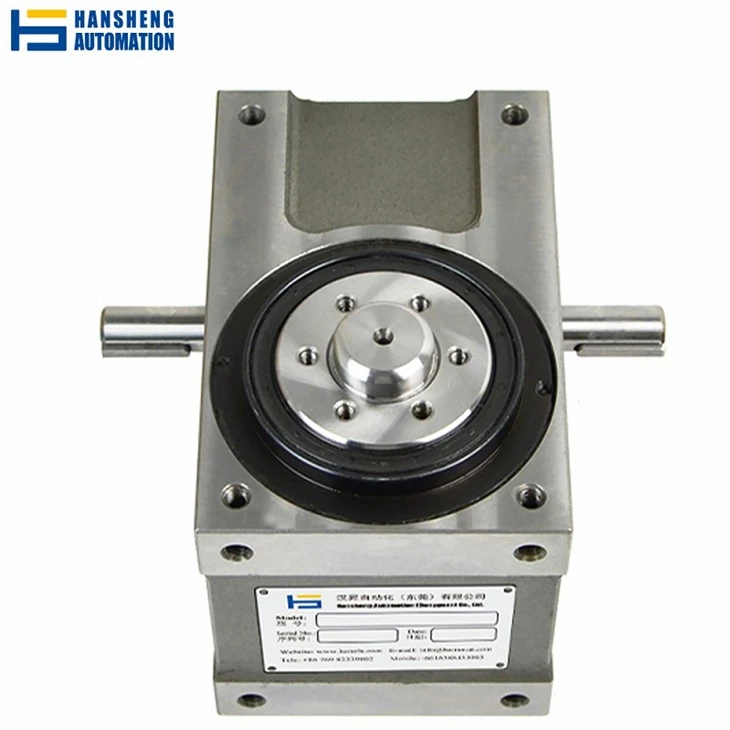

As a supplier of Rotary Index Tables, we offer a wide range of products with different load capacities to meet the diverse needs of our customers. Whether you're working on a small - scale project or a large - scale industrial application, we've got you covered.
We also provide Custom Cams Design And Manufacturing services. This is great for customers who have specific requirements for their indexing applications. Our team of experts can design and manufacture custom cams to ensure that your rotary index table performs exactly the way you need it to.
If you're specifically looking for a cam - indexer option, our DF Cam Indexers are a great choice. They are designed to provide high - precision and reliable indexing, with a load capacity that can be tailored to your needs.
In conclusion, understanding the load capacity of a rotary index table is essential for choosing the right product for your application. By considering factors such as the weight of the workpiece, additional tooling, type of motion, and mounting style, you can make an informed decision. And if you need help or have any questions, don't hesitate to reach out. We're here to assist you in finding the perfect rotary index table for your business. Whether you're just starting a new project or looking to upgrade your existing equipment, we can provide you with the solutions you need. So, if you're interested in purchasing a rotary index table, feel free to contact us for a detailed discussion. We'll work with you to understand your requirements and recommend the best product with the appropriate load capacity for your operations.
References
- General knowledge of rotary index table technology and industry standards.
- In - house product documentation and specifications.