

Hey there! As a supplier of Rotary Index Tables, I often get asked about the dynamic accuracy of these nifty devices. So, let's dive right in and explore what dynamic accuracy really means in the context of rotary index tables.
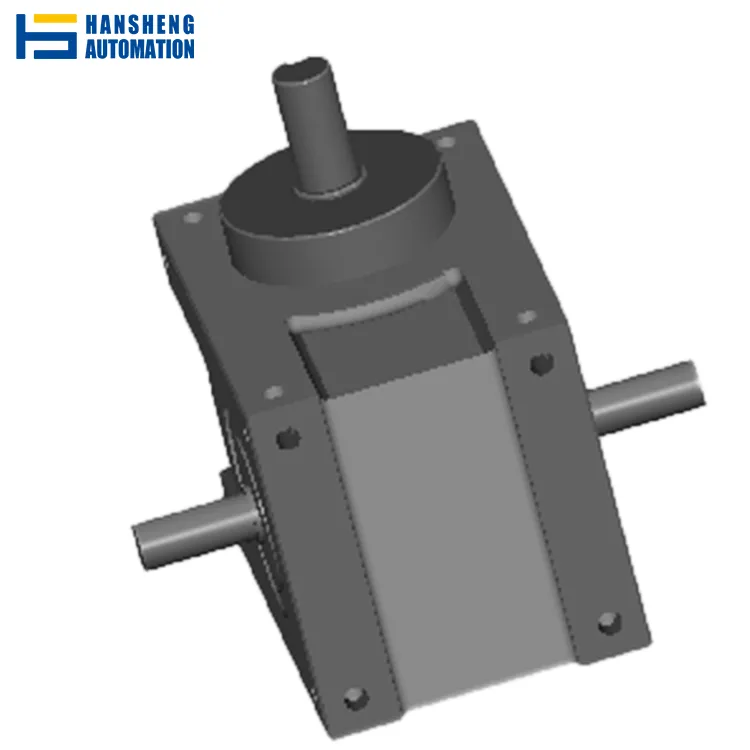
First off, what's a rotary index table? Well, it's a precision device used in manufacturing and automation. It rotates a workpiece or a tool to specific angular positions, allowing for multi - station operations. Think of it like a super - precise turntable that can stop exactly where you need it to, over and over again.
Now, let's talk about accuracy. Accuracy in a rotary index table can be divided into two main types: static accuracy and dynamic accuracy. Static accuracy is pretty straightforward. It's the ability of the index table to stop at a specific position when it's not moving. You set the table to a certain angle, and it should land right on the money. But dynamic accuracy is a whole different ballgame.
Dynamic accuracy refers to how well the index table can achieve the desired angular positions while it's in motion. There are a bunch of factors that can affect dynamic accuracy.
One major factor is the drive mechanism. For instance, in our Cam Indexing Drive For Multi - station Rotary Pad Printer, the cam design plays a crucial role. A well - designed cam can ensure smooth and precise motion during the indexing process. The cam moves the table through its rotation, and if it's off even a little bit, the dynamic accuracy will suffer. The shape of the cam, the material it's made from, and how it's machined all contribute to how well the table can move to the correct position while in motion.
Another factor is the load on the table. If you're putting a heavy workpiece on the rotary index table, it can introduce additional forces. These forces can cause the table to deviate from its intended path during rotation. For example, if the load is unevenly distributed, it can create a torque that makes the table wobble a bit. This wobbling means that when the table stops, it might not be exactly where you wanted it to be. So, when considering dynamic accuracy, you've got to take into account the weight and distribution of the load you'll be using.

The speed of rotation also has a big impact. When the table rotates too fast, there's more inertia at play. Inertia is like the table's resistance to changes in its motion. If the table is moving really quickly and then has to stop suddenly to reach a specific position, it might overshoot or undershoot. It's kind of like trying to stop a car going at high speed exactly at a stop sign; it's a lot harder than if you're going slowly. So, finding the right balance between speed and accuracy is key.
Now, how do we measure dynamic accuracy? Well, it's usually measured using angular deviation. This is the difference between the actual angle the table stops at and the desired angle. Manufacturers like us use high - precision sensors to measure this deviation. We can measure it in arc - minutes or arc - seconds, which are very small angular units. For example, a high - quality rotary index table might have a dynamic accuracy of a few arc - minutes. This means that when it stops, it's within a few arc - minutes of the position it was supposed to stop at.
Our Globoidal Cam Indexers are designed to offer excellent dynamic accuracy. The globoidal cam design provides a smooth transfer of motion, reducing the chances of overshooting or undershooting the desired positions. It's a more advanced design compared to some traditional cam systems, and it's really good at handling different loads and speeds while maintaining high accuracy.
Another product we offer, the Indexing Turntable, also focuses on dynamic accuracy. The indexing turntable is built with precision bearings and a robust structure. These components help to minimize any vibrations or movements that could affect the accuracy while the table is in motion. The design allows for precise control of the rotational movement, ensuring that the table can reach and hold the correct positions even under challenging conditions.
So, why does dynamic accuracy matter? In manufacturing, every little bit of precision counts. If a rotary index table doesn't have good dynamic accuracy, it can lead to faulty products. For example, in a multi - station machining operation, if the table doesn't stop at the exact right position, the machining tools might cut in the wrong place. This can result in parts that don't fit together properly or don't meet the required specifications. In industries like aerospace and automotive, where parts need to be extremely precise, dynamic accuracy is non - negotiable.
We're always working on improving the dynamic accuracy of our rotary index tables. We invest in research and development to come up with better designs and use the latest materials. We also conduct rigorous testing on each table before it leaves our facility. This way, we can guarantee that our customers are getting a product that meets their high - precision needs.
If you're in the market for a rotary index table, don't just focus on the price or the basic features. Make sure you pay close attention to the dynamic accuracy. It's a crucial factor that can have a big impact on your manufacturing process and the quality of your end products.
If you have any questions about our rotary index tables or want to learn more about dynamic accuracy, feel free to reach out. We'd be more than happy to discuss your specific needs and help you find the right solution for your business. Whether you're a small - scale manufacturer or a large - scale industrial operation, we've got the expertise and products to meet your requirements. So, let's start a conversation about how our rotary index tables can improve your production process.
References
- General knowledge in the field of rotary index table technology and manufacturing.