

A planetary gearbox, known for its high torque transmission, compact design, and excellent efficiency, is a critical component in various industrial applications. As a leading Planetary Gearboxes supplier, we understand the importance of adjusting the speed of a planetary gearbox to meet specific operational requirements. In this blog, we will explore the principles, methods, and considerations for adjusting the speed of a planetary gearbox.
Understanding the Basics of a Planetary Gearbox
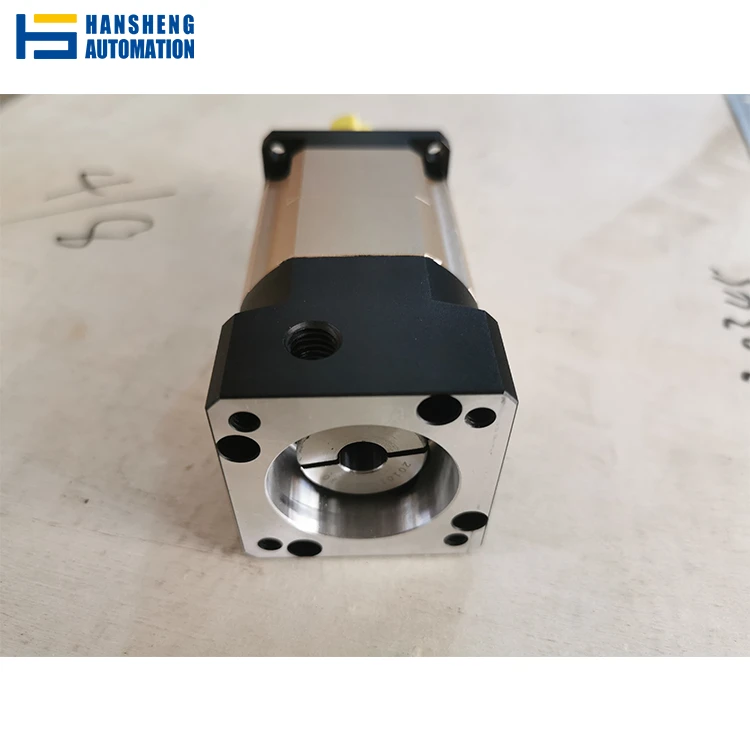
Before delving into speed adjustment, it's essential to understand the basic structure and working principle of a planetary gearbox. A typical planetary gearbox consists of a sun gear, multiple planet gears, a ring gear, and a carrier. The sun gear is located at the center, the planet gears revolve around the sun gear while rotating on their own axes, and the ring gear surrounds the planet gears. The carrier holds the planet gears in place.
The gear ratio of a planetary gearbox, which determines the speed and torque relationship between the input and output shafts, is calculated based on the number of teeth on the sun gear, planet gears, and ring gear. By changing the gear ratio, we can adjust the speed of the output shaft relative to the input shaft.

Principles of Speed Adjustment in Planetary Gearboxes
The speed adjustment of a planetary gearbox is primarily based on the gear ratio formula. The gear ratio (GR) of a planetary gearbox can be expressed in different ways depending on the configuration. For a simple planetary gear system where the sun gear is the input, the ring gear is fixed, and the carrier is the output, the gear ratio is given by:
GR = 1 + (Nr / Ns)
where Nr is the number of teeth on the ring gear and Ns is the number of teeth on the sun gear.
If the carrier is the input, the ring gear is fixed, and the sun gear is the output, the gear ratio is:
GR = Ns / (Ns + Nr)
By changing the number of teeth on the gears or the way the gears are connected (e.g., changing the fixed component), we can alter the gear ratio and thus adjust the speed of the output shaft.
Methods of Adjusting the Speed of a Planetary Gearbox
1. Changing the Gear Ratio
- Gear Replacement: One of the most straightforward methods is to replace the gears in the planetary gearbox with gears having different numbers of teeth. For example, if we want to increase the speed reduction ratio, we can use a sun gear with fewer teeth and a ring gear with more teeth. However, this method requires careful consideration of the gear material, strength, and compatibility to ensure the proper functioning of the gearbox.
- Multi - stage Planetary Gearboxes: Another way to change the gear ratio is by using multi - stage planetary gearboxes. In a multi - stage system, multiple planetary gear sets are connected in series. Each stage can have a different gear ratio, and by combining these stages, we can achieve a wide range of overall gear ratios. This provides greater flexibility in speed adjustment. For instance, a two - stage planetary gearbox can offer a more significant speed reduction compared to a single - stage gearbox.
2. Variable Input Speed
- Using a Variable - Speed Motor: By connecting the planetary gearbox to a variable - speed motor, we can adjust the input speed, which in turn affects the output speed. Variable - speed motors, such as AC induction motors with variable frequency drives (VFDs) or DC motors with speed controllers, allow for precise control of the rotational speed. For example, in an industrial conveyor system, a VFD can be used to adjust the speed of the motor driving the planetary gearbox, enabling the conveyor to operate at different speeds according to the production requirements.
- Mechanical Speed Variators: Mechanical speed variators can also be used to vary the input speed to the planetary gearbox. These devices use mechanical means, such as belts, pulleys, or friction drives, to change the speed ratio between the input and output shafts. They offer a simple and cost - effective way to adjust the speed, especially in applications where a continuous range of speed adjustment is required.
3. Changing the Configuration of the Planetary Gear Set
- Selective Locking or Unlocking of Components: In some planetary gearboxes, certain components can be selectively locked or unlocked to change the power flow and the resulting gear ratio. For example, if the ring gear can be either fixed or allowed to rotate, different speed ratios can be achieved. When the ring gear is fixed, the gearbox operates in one mode, and when the ring gear is allowed to rotate, the speed and torque characteristics change. This method provides a flexible way to adjust the speed without the need for physical gear replacement.
Considerations When Adjusting the Speed of a Planetary Gearbox
1. Torque Requirements
When adjusting the speed of a planetary gearbox, it's crucial to consider the torque requirements of the application. A change in speed usually implies a change in torque. According to the principle of conservation of power (P = T × ω, where P is power, T is torque, and ω is angular speed), if the speed is increased, the torque will decrease, and vice versa. Therefore, it's necessary to ensure that the gearbox can handle the required torque at the adjusted speed. For example, in a heavy - duty lifting application, a lower speed with higher torque may be required to lift the load safely.
2. Efficiency
The efficiency of a planetary gearbox can be affected by speed adjustment. Generally, planetary gearboxes operate at their highest efficiency within a certain speed range. When the speed is adjusted outside this range, the efficiency may decrease due to factors such as increased friction, lubrication issues, and gear meshing losses. It's important to choose the adjustment method that minimizes the impact on efficiency to ensure energy - efficient operation.
3. Lubrication
Proper lubrication is essential for the smooth operation of a planetary gearbox, especially when the speed is adjusted. Different speeds may require different types of lubricants or lubrication methods. For high - speed applications, a lubricant with good anti - foaming and high - temperature resistance properties may be needed to prevent excessive wear and heat generation. On the other hand, for low - speed, high - torque applications, a lubricant with high viscosity may be more suitable to provide sufficient lubrication between the gear teeth.
4. Noise and Vibration
Speed adjustment can also affect the noise and vibration levels of a planetary gearbox. Changes in speed can cause resonance or imbalance in the gear system, leading to increased noise and vibration. It's important to take measures to minimize these effects, such as proper gear alignment, balancing, and the use of vibration - damping materials.
Applications of Speed - Adjustable Planetary Gearboxes
1. Robotics
In robotic systems, speed - adjustable planetary gearboxes are used to control the movement of robot arms and joints. By adjusting the speed, robots can perform tasks with different levels of precision and speed. For example, during a delicate assembly operation, a lower speed may be required for accurate positioning, while during a high - speed pick - and - place operation, a higher speed can be used to increase productivity.
2. Machine Tools
Machine tools, such as lathes, milling machines, and drilling machines, often require speed adjustment to accommodate different cutting materials and operations. A planetary gearbox with adjustable speed allows the machine to operate at the optimal cutting speed, improving the quality of the machined parts and reducing tool wear.
3. Conveyor Systems
Conveyor systems in industries such as logistics, manufacturing, and food processing need to operate at different speeds depending on the product flow and processing requirements. Speed - adjustable planetary gearboxes enable the conveyor to adjust its speed to match the production line, ensuring efficient material handling.
Conclusion
Adjusting the speed of a planetary gearbox is a crucial aspect of optimizing its performance in various applications. As a Planetary Gearboxes supplier, we offer a wide range of planetary gearboxes with different configurations and adjustment capabilities to meet the diverse needs of our customers. Whether you need to change the gear ratio, use a variable - speed motor, or modify the gearbox configuration, our team of experts can provide you with the best solutions.
If you are interested in our Planetary Reducers Systems or have any questions about speed adjustment in planetary gearboxes, please feel free to contact us for further discussion and procurement. We look forward to working with you to achieve your industrial goals.
References
- "Fundamentals of Machine Elements" by Robert C. Juvinall and Kurt M. Marshek
- "Mechanical Design of Machine Elements and Machines: A Failure Prevention Perspective" by Jack A. Collins and Shigley
- "Planetary Gear Trains: Synthesis, Analysis, and Applications" by H. A. Mabie and F. W. Ocvirk