

Harmonic drives are widely used in various industries, including robotics, aerospace, and precision machinery, due to their high torque transmission, compact size, and excellent positional accuracy. However, one of the common challenges associated with harmonic drives is the generation of noise during operation. Excessive noise not only affects the working environment but can also indicate potential mechanical issues or inefficiencies. As a harmonic drive supplier, we understand the importance of reducing noise levels for optimal performance and user satisfaction. In this blog, we'll explore several effective strategies to reduce the noise of a harmonic drive.
Understanding the Sources of Noise in Harmonic Drives
Before delving into noise - reduction methods, it is essential to understand where the noise in harmonic drives comes from. The primary sources of noise include:
- Gear Mesh Noise: When the flexible spline and the circular spline engage and disengage, there is mechanical contact and impact, which generate vibration and subsequently noise.
- Resonance: If the operating frequency of the harmonic drive coincides with the natural frequency of the drive or its supporting structure, resonance can occur, amplifying the noise level.
- Lubrication Issues: Insufficient or inappropriate lubrication can cause increased friction between the moving parts, leading to more noise.
- Mechanical Imbalance: Misalignment or imbalance in the harmonic drive components can result in uneven forces and vibrations, contributing to noise.
Design Improvements for Noise Reduction
Optimized Gear Geometry
- The shape and profile of the teeth on the flexible spline and circular spline play a crucial role in noise generation. Through advanced manufacturing techniques and design algorithms, we can optimize the tooth profile to ensure a smoother and more gradual engagement process. This reduces the impact forces during gear meshing, thereby minimizing the noise. For example, using involute or modified involute tooth profiles can provide better contact characteristics and reduce the shock and vibration associated with gear meshing.
- Moreover, accurate machining processes are essential to ensure the precision of the gear teeth. Any deviations in tooth thickness, pitch, or helix angle can cause uneven contact and increased noise. Our manufacturing facilities are equipped with state - of - the - art CNC machines and precision measuring instruments to guarantee the high - quality production of harmonic drives with precisely machined gears.
Balanced Design
- Mechanical imbalance is a significant contributor to noise and vibration in harmonic drives. To address this issue, we employ advanced balancing techniques during the manufacturing process. By carefully measuring the mass distribution of the components and making necessary adjustments, we can minimize the unbalanced forces. For instance, adding counterweights or modifying the shape of the rotating parts can help achieve a more balanced design.
- In addition, proper alignment of the harmonic drive components is crucial. Misaligned shafts or bearings can create additional stresses and vibrations. Our installation guides provide detailed instructions to ensure correct alignment during the assembly of the harmonic drive, which helps reduce noise and improve the overall performance and lifespan of the drive.
Lubrication Management
Selecting the Right Lubricant
- The choice of lubricant is vital for reducing friction and noise in harmonic drives. We recommend using high - quality synthetic lubricants specifically formulated for harmonic drive applications. These lubricants offer excellent anti - wear properties, high viscosity index, and good thermal stability. They can form a thin, protective film between the moving parts, reducing the direct metal - to - metal contact and minimizing friction and noise.
- For example, some lubricants are designed to have low - foaming characteristics, which is important in preventing air entrapment and ensuring efficient lubrication. Additionally, they should have good oxidation resistance to prevent the formation of sludge and deposits that can affect the performance of the harmonic drive over time.
Lubrication Maintenance
- Regular lubrication maintenance is necessary to ensure the long - term effectiveness of the lubricant. Over time, the lubricant can degrade due to factors such as temperature, contamination, and mechanical stress. Therefore, we suggest following a lubrication maintenance schedule. This may involve periodic oil changes, checking the lubricant level, and inspecting for any signs of contamination.
- In some cases, we also provide lubrication monitoring systems that can detect changes in the lubricant properties, such as viscosity and particle content. This allows for proactive maintenance and helps prevent noise - related issues caused by poor lubrication.
Resonance Mitigation
Frequency Analysis
- Conducting a frequency analysis of the harmonic drive system is crucial to identify potential resonance frequencies. By using vibration sensors and spectrum analysis tools, we can measure the vibration frequencies during operation and compare them with the natural frequencies of the drive and its supporting structure.
- Once the resonance frequencies are identified, we can implement measures to shift them away from the operating frequency range of the harmonic drive. This can be achieved by modifying the stiffness or mass of the drive components or the supporting structure. For example, adding damping materials or changing the thickness of certain parts can alter the natural frequency of the system.
Damping Techniques
- Damping is an effective way to reduce the amplitude of vibrations caused by resonance. We can incorporate damping materials into the design of the harmonic drive or its housing. These materials absorb the vibrational energy and convert it into heat, thereby reducing the vibration and noise levels.
- For instance, elastomeric damping pads can be installed between the harmonic drive and its mounting surface. These pads provide both vibration isolation and damping, helping to reduce the transmission of vibrations to the surrounding structure and minimizing noise.
Installation and Operating Conditions
Proper Installation
- Correct installation of the harmonic drive is essential for noise reduction. It is important to follow the manufacturer's installation instructions carefully. This includes ensuring a clean installation environment, proper alignment of the drive with the connected components, and correct tightening of bolts and fasteners.
- For example, over - tightening or under - tightening the mounting bolts can cause misalignment and stress concentration, leading to increased noise and potential damage to the drive. By using a torque wrench and following the specified torque values, we can ensure a secure and proper installation.
Optimal Operating Conditions
- Operating the harmonic drive within its recommended parameters can also help reduce noise. This includes maintaining the appropriate speed, load, and temperature. Running the drive at excessive speeds or under heavy loads beyond its rated capacity can increase the mechanical stress and noise levels.
- Additionally, controlling the operating temperature is crucial. High temperatures can cause the lubricant to degrade more quickly and affect the material properties of the drive components, leading to increased noise. We recommend providing proper cooling and ventilation for the harmonic drive, especially in high - load or continuous - operation applications.
Our Product Offerings with Noise - Reduction Features
As a leading harmonic drive supplier, we offer a range of high - quality products designed with noise - reduction in mind. Our CSD Series Strain Wave Reducer features an optimized gear design and advanced lubrication system, which significantly reduces noise levels during operation. The compact and lightweight design of this series makes it ideal for applications where space and noise are critical factors, such as in small - scale robotics.
Our Harmonic Drive Strain Wave Reducer is another excellent option. It is engineered with precision - machined gears and balanced components to minimize vibration and noise. This reducer is widely used in industrial robots and automation systems, where quiet operation is essential for a comfortable working environment.

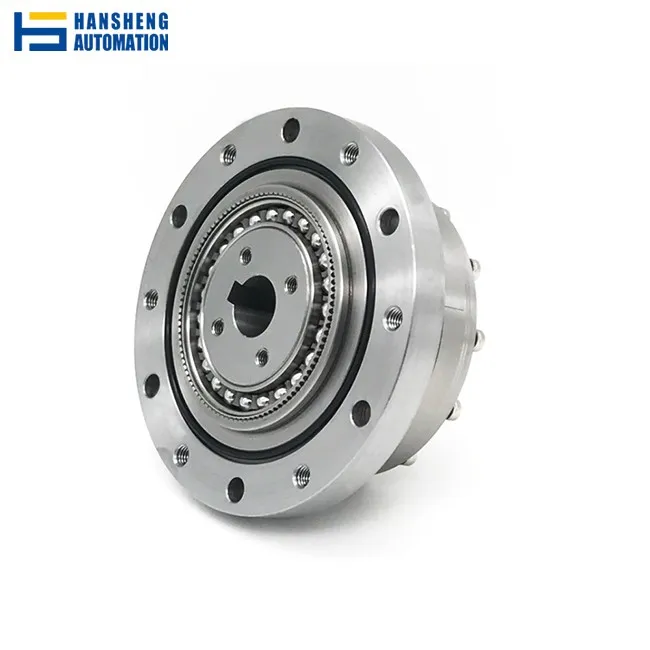
For applications requiring high - precision rotation, our Robot Arm Base Rotary Table is designed to reduce noise through its advanced damping and lubrication technologies. The smooth and quiet operation of this rotary table ensures accurate positioning and reliable performance in robotic applications.
Contact Us for Procurement
If you are looking for high - performance harmonic drives with reduced noise levels for your applications, we are here to help. Our team of experts can provide you with detailed product information, technical support, and customized solutions to meet your specific requirements. We invite you to contact us for procurement discussions and take the first step towards enhancing the performance and quietness of your systems.
References
- “Gear Noise and Vibration: Theory, Practice, and Control” by D. R. Houser, E. J. Buckingham, and B. P. Riemer.
- “Fundamentals of Machine Elements” by A. S. Seireg and S. S. Wang.
- Research papers on harmonic drive design and noise reduction from leading industry journals.